When Your Finger Keeps Moving Without Realizing It
In the digital age, a small gesture can easily turn into a major habit. A finger moves, the screen refreshes, and new content appears endlessly. Without noticing, time flows along with it.
Many people only intend to check their phone for a moment. Yet that “moment” often becomes much longer than expected.
When “Just Five Minutes” Turns Into an Hour
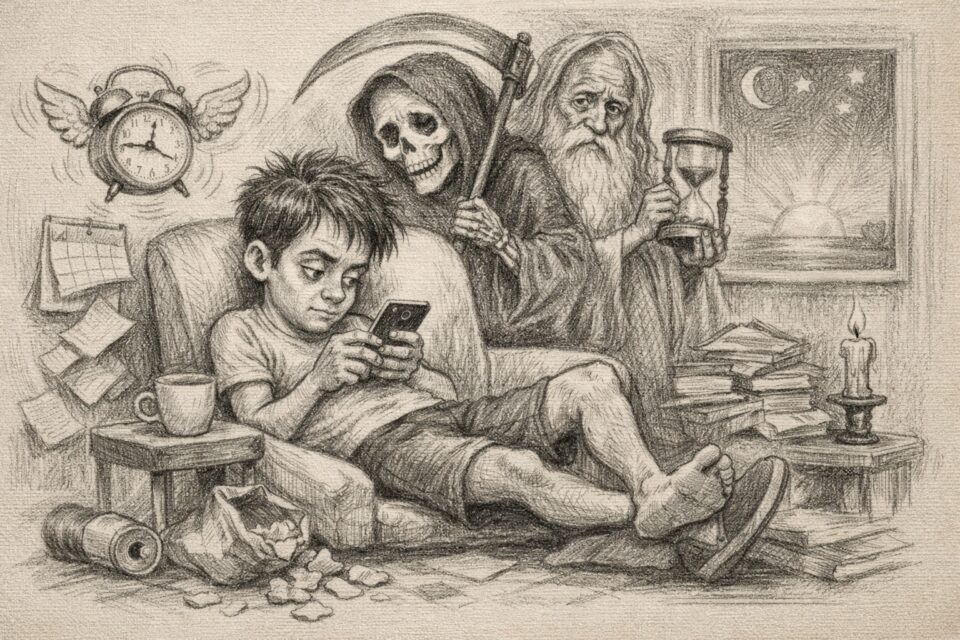
The situation is familiar. Someone opens social media to fill five spare minutes. But when they glance at the clock again, an hour has already passed.
Scroll after scroll makes time feel blurred. Each piece of content is short, yet the supply is endless.
The Rise of Endless Scrolling in the Digital Era
This habit has become increasingly common because most digital platforms are designed to hold our attention. Content keeps flowing, with no final page in sight.
Stopping often feels harder than continuing.
Endless Scrolling: A Small Habit That Seems Harmless
At its core, scrolling is a simple action. It requires little effort and almost no concentration.
Precisely because it is so easy, it often becomes automatic.
Doomscrolling and Infinite Scrolling
The term doomscrolling refers to the habit of continuously consuming news or online content without stopping. Meanwhile, infinite scrolling describes a design feature where content keeps loading endlessly.
There is no natural stopping point. There is always something new below the screen.
Why It’s Hard to Stop
Scrolling delivers quick entertainment with minimal effort. The human brain naturally prefers activities that are easy and enjoyable. When those two factors combine, habits form quickly.
App Designs That Keep Us Scrolling
Many digital platforms are intentionally designed to keep users engaged for as long as possible.
Features That Capture Attention
Infinite scrolling allows users to move from one piece of content to another without pause. There is no clear reason to stop.
Algorithms That Understand Our Preferences
Every like, comment, and watch duration becomes data. From that data, algorithms show content that increasingly matches personal interests.
The more relevant the content becomes, the longer users stay.
The Psychology Behind Platform Design
Many platforms rely on a principle known as variable reward—rewards that appear unpredictably. Sometimes the content is ordinary, sometimes it is highly engaging.
This uncertainty keeps people searching for the next interesting post.
The Dopamine Trap Behind the Screen
Every time we encounter something entertaining, the brain releases dopamine—a chemical associated with pleasure and motivation.
The effect is small but repetitive. Over time, the brain starts seeking that feeling again.
Instant Entertainment Without Effort
Digital content offers quick stimulation. No long reading, no deep thinking required. As a result, the brain adapts to short bursts of entertainment.
“Just One More”
After one video ends, a small urge appears: watch one more. Then another. Before long, time continues slipping away.
Scrolling as a Daily Routine
Scrolling has quietly integrated itself into everyday life.
Checking the Phone Right After Waking Up
Many people begin their day by looking at their phone before they are fully awake.
Scrolling During Work or Study
When work becomes tiring, the phone becomes a quick distraction. What begins as a short break can easily stretch longer.
Scrolling Before Sleep
At night, many people end their day the same way—scrolling through content in bed.
When Time Disappears
One of the most noticeable effects of endless scrolling is the quiet loss of time.
Five Minutes Turning Into Hours
Because each piece of content is short, the brain does not feel like it is spending much time. In reality, the total duration can be surprisingly long.
Slowly Eroding Productivity
A few minutes lost repeatedly throughout the day can significantly reduce productive time.
Important Activities Get Delayed
Books that should be read, tasks that need to be finished, and even simple conversations are often interrupted by the screen.
Effects on Mental Health and Focus
Excessive scrolling affects more than just time—it can also impact mental well-being.
Information Overload
The human brain is not designed to process an endless stream of information. Too many stimuli can create mental fatigue.
Social Comparison
Social media often presents carefully curated highlights of people’s lives. Seeing this constantly can trigger feelings of inadequacy.
Shortened Attention Span
Short-form content trains the brain to switch attention quickly. As a result, maintaining focus on longer tasks becomes harder.
Scrolling as an Escape from Boredom
Often, scrolling happens not because it is necessary, but because it fills empty moments.
Avoiding Silence
Many people feel uncomfortable with quiet moments. The phone provides instant distraction.
A Constant Source of Entertainment
Within seconds, the screen can offer something new to watch or read. That accessibility makes it difficult to resist.
Signs the Habit Is Becoming Excessive
Some warning signs include:
- Opening the phone without a clear purpose
- Losing track of time while scrolling
- Feeling guilty after spending too long online
Why Scrolling Feels Productive (But Isn’t)
Scrolling often creates the illusion of activity.
The Illusion of Learning
Consuming large amounts of content may feel informative, yet most of it is quickly forgotten.
Being Busy Without Results
Scrolling creates the sensation of doing something, while rarely producing anything meaningful.
Reducing the Scrolling Habit
Small changes can help regain control.
Set Time Limits
Many devices provide screen-time features that help regulate app usage.
Reduce Notifications
Fewer notifications mean fewer triggers to check the phone.
Replace the Habit
Reading a book, taking a short walk, or having a conversation can be far more rewarding alternatives.
Creating Screen-Free Moments
Certain parts of the day can be reserved as device-free time.
A Phone-Free Morning
Starting the day without a screen can bring greater mental clarity.
Meals Without Devices
Conversations become richer without constant interruptions.
Nights Without Scrolling
Reducing screen time before bed can improve sleep quality.
Taking Back the Time That Was Lost
Endless scrolling may appear harmless, yet its impact can be significant. It quietly absorbs time, minute by minute.
Awareness is the first step toward change.
By using technology more intentionally, the time once consumed by endless scrolling can return to activities that truly matter.
read also :https://gupuh.com/en/the-source-of-stress-sitting-at-the-desk-next-to-you-that-toxic-coworker/