The Calendar That Constantly Haunts Our Wallet
There is a phenomenon more consistent than the weather forecast.
More reliable than a politician’s promises during a campaign.
It’s called: the end of the month.
Strange, really. Just yesterday it felt like the 1st. Salary arrived. The wallet felt thick—like a 700-page novel. Life seemed full of possibilities: good food, expensive coffee, and checking out discounted items that were never truly necessary.
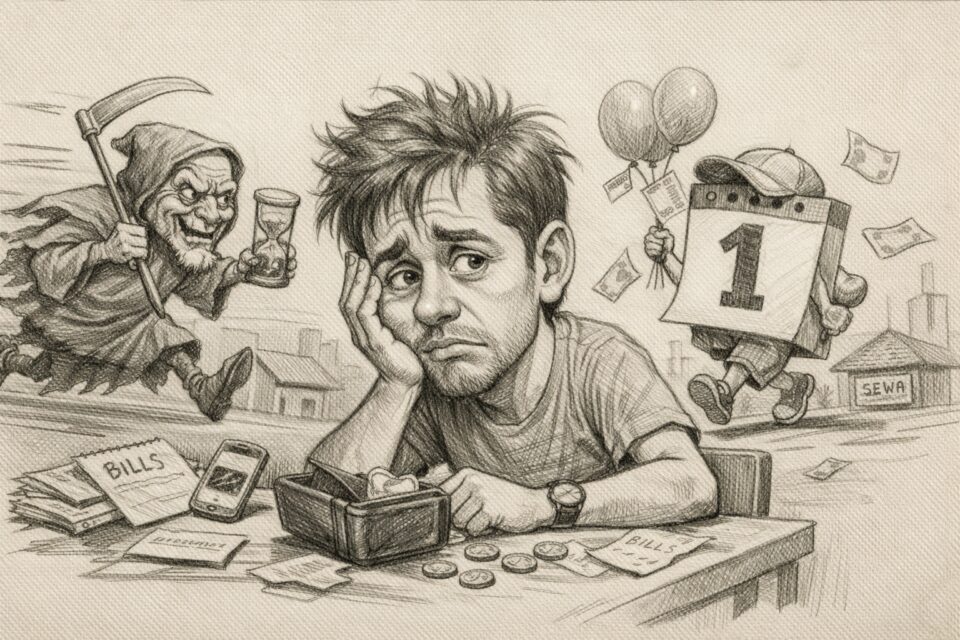
And then suddenly… the 27th appears on the calendar like an uninvited guest.
The wallet?
It now looks like a desert that has just been abandoned by the last camel.
The question is simple, yet painful:
Why does the end of the month always seem to arrive faster than the beginning of the month?
Let’s dissect this phenomenon—scientifically, psychologically, and with a little dramatic flair.
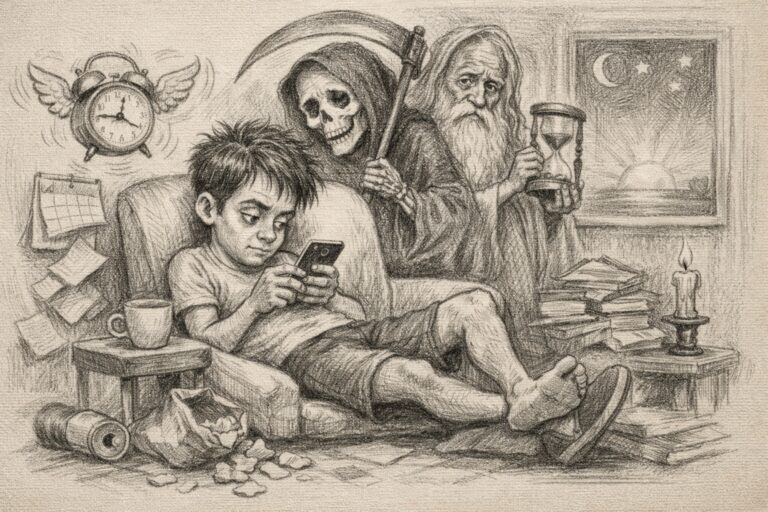
The Illusion of Time: When the Brain Meddles With the Calendar
Technically speaking, the beginning and the end of the month have the same duration.
A day is still 24 hours. There is no calendar conspiracy secretly speeding up the 25th.
However, the human brain has a bad habit: it measures time based on emotional experience.
During the early days of the month:
-
we feel happy
-
money is still available
-
life choices feel wide open
Days feel relaxed. The mind is not busy calculating the remaining balance.
The result?
Time feels slow and spacious.
But as the end of the month approaches, the brain suddenly activates like a fire alarm.
There are too many things happening at once:
-
the remaining balance
-
unpaid bills
-
necessities that still need to be purchased
-
and financial miracles that stubbornly refuse to happen
When the mind is busy, time begins to jump forward faster.
It feels as if the calendar is running, while we are still trying to catch up.
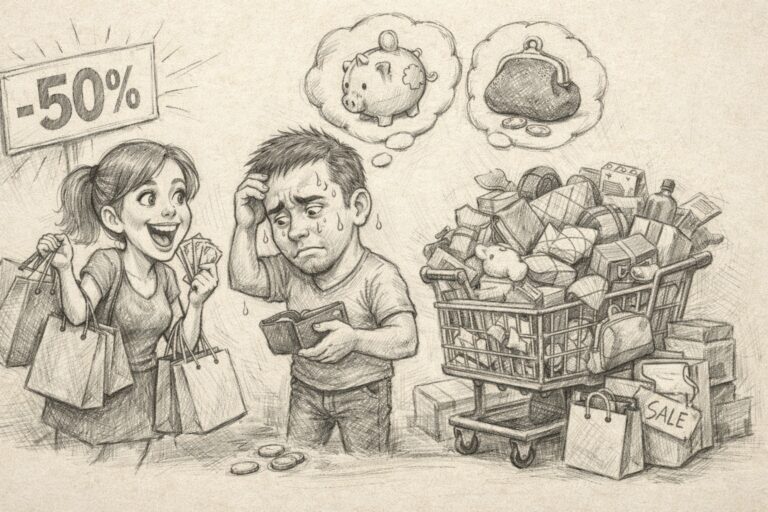
The Euphoria of Early Month: A Shopping Festival Without Logical Permission
The beginning of the month often arrives with a dangerous feeling: financial optimism.
This is the psychological condition where someone believes their money is enough for everything—even things that were never actually necessary.
For example:
-
a $3 coffee because “once in a while is fine”
-
online food delivery where the shipping costs more than the meal
-
a 50% discount on an item you never wanted before
Ironically, discounts often make people feel frugal, even though they have just spent money.
The early month then transforms into a kind of personal economic festival.
Shopping starts to feel like a basic human right.
The wallet opens.
The balance smiles.
E-commerce apps cheer enthusiastically.
Until eventually…
the end of the month begins approaching like dark clouds.
The End of the Month: The Era of Survival
If the beginning of the month is a party, then the end of the month is survival mode.
The menu changes drastically.
At first it was:
-
artisan coffee
-
crispy chicken
-
cute desserts
Then suddenly it becomes:
-
instant noodles
-
rice with eggs
-
plain water as an elegant closing drink
All financial decisions suddenly become extremely wise.
The same person who bought expensive coffee two weeks ago now says with philosophical confidence:
“Making coffee at home is healthier.”
But honestly, it has nothing to do with health.
The balance simply forced wisdom into existence.
The end of the month teaches one important lesson:
humans can become very creative when money runs thin.
We Often Blame Time
Interestingly, many people blame the calendar.
“Why does the end of the month come so fast?”
But if we examine things honestly, what actually moves fast is:
-
checkout buttons
-
digital payments
-
card swipes
-
and impulsive decisions at 11 PM
The end of the month does not arrive faster.
It simply waits patiently, while we are busy accelerating our journey toward it.
The calendar never cheats.
It is the wallet that tends to be overly optimistic.
A Classic Lesson From the Calendar
In the end, the phenomenon of the late month is a rather brutal monthly reminder.
It arrives carrying a simple message:
-
money is limited
-
desires are unlimited
-
and discounts are not always good news
Yet strangely, every month we repeat the same ritual.
Beginning of the month: full of hope.
Middle of the month: cautious.
End of the month: life reflection.
Then the salary comes again.
And the cycle begins once more—like a drama series that never truly ends.
The Calendar Is Never Wrong
If someday you feel the end of the month arrives too quickly, check one small thing.
Not the calendar.
Not time itself.
But your transaction history.
Because very often, the end of the month does not actually come faster.
It is we who run too quickly toward it—with a shopping cart in our hands and financial optimism that is far too confident.
And as always…
the wallet can only surrender and follow the storyline.