The Mouth Speeds, the Brain Misses the Bus
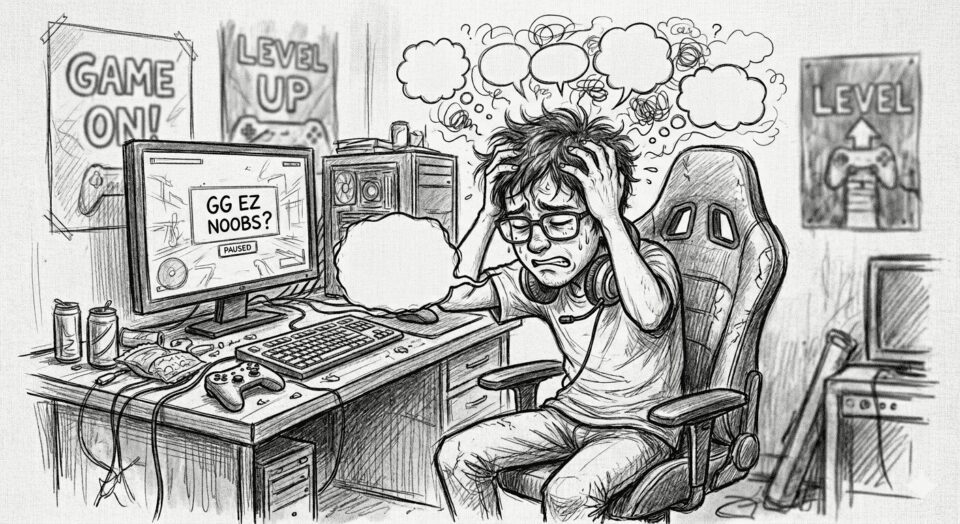
There are moments when the mouth accelerates like a motorcycle with faulty brakes, while the brain is still looking for its helmet. The sentence has already been launched. The other person’s expression shifts. And we? We realize—just a few seconds too late—that a miniature social catastrophe has just occurred.
Speaking is a social reflex. Fast. Spontaneous. Sometimes heroic. Often tragic.
A Universal Phenomenon: “Why Did I Say That?”
This question is practically the national anthem of awkward conversations. It appears after meetings, after hangouts, after family debates, even after jokes that went a little too far. A simple sentence, yet loaded with existential regret.
Ironically, awareness always arrives late. As if the brain only reconnects to the network after the social signal has already dropped.
Regret Always Arrives Late—Like an Ex Asking for a Second Chance
Regret never waits politely at the door. It shows up after the damage. After the awkward silence. After your reputation has suffered a microscopic dent.
It brings evaluation. But never a time machine.
Five Seconds of Drama: When Words Slip Out Without Permission
Most conversational disasters happen in under five seconds. Five impulsive seconds. Five seconds of counterfeit courage. Five seconds without an internal filter.
And then comes the silence.
Impulse Is Fast, Logic Is Slow
Impulse is a sprinter. Logic is a bureaucrat reviewing documents one page at a time. When emotions are triggered, impulse crosses the finish line before logic has even tied its shoes.
Fast does not mean accurate. It just feels satisfying.
The Seconds After the Sentence: A Judging Silence
There is no sound louder than the silence after a misplaced sentence. Faces change. The air thickens. We replay our own words with forensic precision.
And realize: that was unnecessary.
Our Brain: Between Failed Brakes and Full Throttle
Inside the mind, there’s a subtle tug-of-war. Spontaneous urges versus rational consideration. Sometimes the coordination is flawless. Sometimes it resembles a meeting without a moderator.
The Emotional System That Loves to Cut the Line
Emotions hate waiting. They are reactive, protective, and deeply convinced of their own urgency. When offended, angry, or overly excited, emotions send a command: “Speak now.”
No draft. No revision.
Logic Arrives Late—With a Stack of Evaluation Notes
Logic eventually appears, carrying consequences, risk analysis, and social projections. Unfortunately, it often shows up after the “send” button has already been pressed.
Logic becomes damage control rather than prevention.
The “Relief Now, Regret Later” Effect
There is a cathartic thrill in unloading what’s on your mind. It feels honest. Authentic. Liberating.
Until the new burden arrives.
The Satisfaction of Speaking Bluntly
Saying exactly what you think can feel like psychological emancipation. As if you are defending yourself or showcasing integrity. There’s adrenaline. A micro-euphoria.
But the pleasure is short-lived.
The Wave of Embarrassment That Follows
Once the situation settles, evaluation begins. Your face warms. Your thoughts spiral. Embarrassment seeps in quietly, bringing the realization that you may have overstepped.
And that feeling lingers.
Why Don’t We Regret Before We Speak?
Because before speaking, confidence dominates. Not doubt.
The Illusion of “It’ll Be Fine”
Reality, however, is not obligated to interpret us kindly.
Overconfidence: Feeling Absolutely Right
Excessive certainty convinces us that our perspective is universal truth. When we feel right, we rarely feel the need to pause.
Right does not always mean wise.
The Brain’s Talent for Self-Justification
The mind is skilled at constructing narratives that protect the ego. Even before speaking, we’ve already convinced ourselves the statement is justified.
Objectivity loses to self-loyalty.
Emotion: The Director Behind the Chaotic Script
Emotion is the invisible director of many messy dialogues. It dictates tone, tempo, and intensity.
Anger: The Temporary Monarch of the Stage
When anger takes over, words become weapons. Sharp. Unfiltered. The goal shifts from resolution to release.
And release rarely produces peace.
Anxiety: Filling the Silence at Any Cost
Anxiety despises silence. So we talk. Randomly. Simply to avoid discomfort.
Not every silence requires commentary.
Excessive Enthusiasm: Even Compliments Can Backfire
Overexcitement can lead us to overshare, expose sensitive information, or joke beyond appropriate limits. The intention may be positive. The outcome is not guaranteed.
Good intentions without regulation still carry risk.
Social Pressure: Afraid of Being “The Weird Quiet One”
Social environments often reward constant opinions. Silence is mistaken for incompetence.
Yet silence can be profoundly strategic.
FOMO in Conversations: Afraid to Miss the Punchline
When everyone is contributing humor or commentary, we feel compelled to join in. We fear irrelevance. We fear invisibility.
And then we say something we should have stored privately.
Trying to Sound Smart, Ending Up Rambling
The desire to appear intelligent can morph into an unstructured monologue. Instead of impressive, it becomes exhausting.
Regret patiently waits at the end of the sentence.
The Culture of “Spontaneity Is Cool”
Spontaneity is often equated with authenticity. No filter equals honesty.
But not all honesty requires immediate broadcasting.
Bluntness Mistaken for Integrity
Directness has value. But without empathy, it transforms into disguised aggression.
Honesty still needs context.
Not Everything True Must Be Said Right Now
Timing is a critical variable in communication. A correct statement delivered at the wrong moment can still cause damage.
Delay is not suppression. It is strategy.
Social Media: A Mass-Production Regret Machine
If face-to-face mistakes are witnessed by a few, digital mistakes have a much larger audience.
And a longer lifespan.
Thumbs Faster Than Conscience
Typing feels effortless. No eye contact. No immediate emotional feedback. Self-regulation weakens.
Empathy gets left behind the screen.
The “Send” Button: Light to Press, Heavy in Consequence
One click. Done. But consequences can multiply—misinterpretations, screenshots, context collapse.
Digital memory is unforgiving.
Screenshots: The Archive of Poor Judgment
Verbal missteps can evaporate. Digital ones can be archived.
And occasionally resurrected at the worst possible moment.
Closing: If in Doubt, Silence Is Not Defeat
Not every thought deserves to become sound. Not every emotion needs a stage. Sometimes restraint is the most refined form of social intelligence.
Because the best sentence is often the one that remains unspoken.
And the lightest regret is the one that never exists.