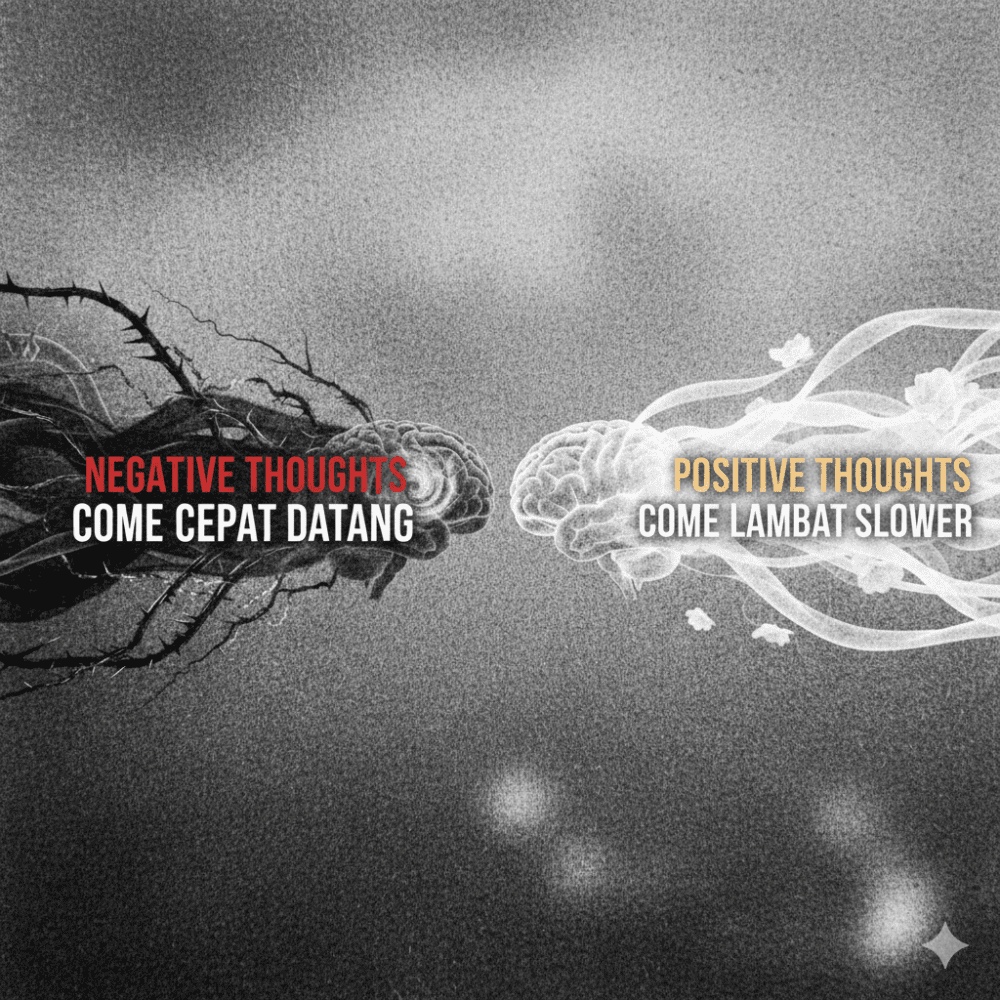
The Speed of the Shadow Mind
Negative thoughts rarely knock. They barge in.
You could receive ten compliments in a day—about your work, your appearance, your character. Yet one offhand criticism, casually delivered and perhaps poorly phrased, will eclipse them all. It lingers.Why?
A Relatable Everyday Scenario: Why One Criticism Outweighs Ten Compliments
Imagine presenting a project at work. Afterward, colleagues congratulate you. “Clear.” “Insightful.” “Well structured.” Then one person says, “It felt a bit rushed at the end.”
That single remark becomes the headline in your mind. The praise dissolves into background noise, while the critique echoes with disproportionate resonance. Hours later, you are still dissecting that final slide.
This asymmetry is not weakness. It is wiring.
The Central Question: Are We Wired for Negativity?
The question is unsettling but necessary. Do negative thoughts come faster because we are flawed—or because we are designed that way?
Modern psychology suggests the latter. The human mind is not neutral. It is vigilant. And vigilance often wears the mask of negativity.
The Brain’s Built-In Alarm System
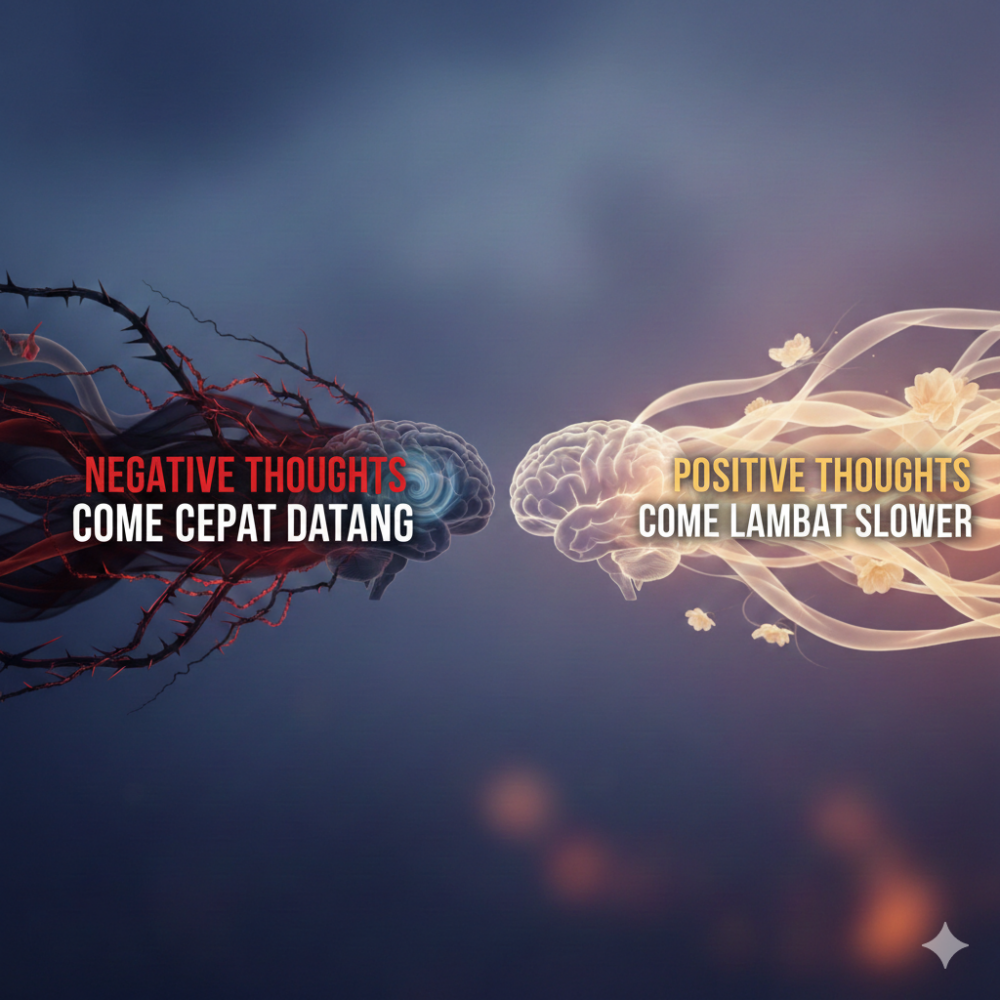
The brain is less a cheerleader and more a sentinel. Its primary mandate is not happiness. It is survival.
Evolutionary Survival: Why Spotting Danger Mattered More Than Savoring Joy
For early humans, overlooking a berry patch was inconvenient. Overlooking a predator was fatal. Evolution therefore favored hyper-awareness of threats over the appreciation of pleasant moments.
Joy could wait. Danger could not.
The Amygdala’s Rapid Response: Threat Detection on Overdrive
Deep within the brain sits the amygdala, a small, almond-shaped structure with outsized influence. It acts as an alarm bell, scanning the environment for signs of peril.
When it detects something even vaguely threatening—a harsh tone, a frown, uncertainty—it reacts with alacrity. Faster than conscious reasoning. Faster than optimism.
How the Brain Prioritizes Bad News Over Good News
Negative information travels swiftly through neural pathways. It commands attention, mobilizes energy, and primes the body for action. Positive information, by contrast, is processed more leisurely.
The result? Bad news feels urgent. Good news feels optional.
The Negativity Bias Explained
Psychologists have a name for this phenomenon: negativity bias.
What Psychologists Mean by “Negativity Bias”
Negativity bias refers to the tendency to give greater weight to unpleasant experiences than to pleasant ones. A single adverse event can overshadow multiple positive ones.
It is not merely emotional exaggeration. It is a measurable cognitive pattern.
Why Negative Experiences Leave Deeper Psychological Imprints
Negative experiences often involve heightened arousal—fear, embarrassment, rejection. These states intensify encoding in the brain. The memory is stored with vivid detail, like a document stamped “urgent.”
Pleasant experiences, while enjoyable, rarely trigger the same physiological intensity.
Research Highlights from Social and Cognitive Psychology
Studies consistently show that losses loom larger than gains, criticism outweighs praise, and threats command more cognitive resources than rewards. The human psyche is asymmetrical by design.
It is biased toward caution.
The Evolutionary Trade-Off
Every adaptation comes at a cost.
Better Safe Than Sorry: Survival Over Satisfaction
Our ancestors survived because they assumed the rustle in the bushes might be dangerous. This predisposition ensured continuity of the species.
But in modern life, the “rustle” is often an email notification or a delayed text message.
The Cost of Ignoring Threats in Prehistoric Times
Ignoring potential danger once meant extinction. The brain learned not to take that gamble. It evolved to err on the side of alarmism.
Overreaction was safer than complacency.
How Ancient Instincts Operate in Modern Environments
Today, those same instincts activate during performance reviews, social interactions, and financial uncertainty. The stakes are rarely life-or-death, yet the brain reacts as if they are.
The context has changed. The circuitry has not.
Emotional Intensity and Memory Encoding
Not all memories are created equal.
Why Painful Moments Are More Vividly Remembered
Embarrassing mistakes from years ago can resurface with startling clarity. The brain tags emotionally charged experiences as significant. Pain signals importance.
Neutral moments fade. Pain persists.
The Role of Stress Hormones in Locking in Negative Memories
Stress hormones such as cortisol and adrenaline surge during threatening events. These chemicals enhance memory consolidation. The brain effectively says, “Remember this. It matters.”
Unfortunately, it remembers too well.
Flashbulb Memories: When the Brain Hits Record
Certain negative events become “flashbulb memories”—high-definition recollections etched with sensory detail. These are cognitive snapshots, indelible and intrusive.
They arrive uninvited.
Social Conditioning and Cultural Influences
Biology sets the stage. Culture amplifies the script.
How Upbringing Shapes Our Internal Dialogue
Children raised in critical environments may internalize scrutiny as a default mental tone. Praise might feel unfamiliar, even suspect.
The inner critic often speaks with borrowed voices.
Achievement-Focused Societies and Fear of Failure
In achievement-oriented cultures, success is celebrated publicly while failure is spotlighted. The implicit message is clear: mistakes are unacceptable.
Fear becomes motivational fuel. And negativity becomes habitual.
Media Saturation: Why Bad News Dominates Headlines
Turn on the news. Catastrophe leads. Conflict captivates. Crisis commands attention.
Media outlets understand human psychology. Negative stories engage more intensely and spread more rapidly.
Cognitive Distortions That Fuel Negative Thinking
The mind does not merely observe negativity. It sometimes manufactures it.
Catastrophizing: Expecting the Worst-Case Scenario
A minor setback becomes a looming disaster. A small error predicts total failure. Catastrophizing magnifies possibilities into certainties.
It is imagination weaponized.
Overgeneralization: One Mistake Defines Everything
Fail once, and the mind declares, “I always fail.” A single data point becomes a sweeping narrative.
Precision disappears. Absolutism takes over.
Mind Reading and Jumping to Conclusions
We assume others’ thoughts without evidence. A neutral expression becomes silent judgment.
Ambiguity is interpreted as hostility.
The Inner Critic’s Loudspeaker
Everyone has an internal narrator. Sometimes, it shouts.
Where Self-Doubt Originates
Self-doubt often emerges from early experiences of evaluation and comparison. Over time, it crystallizes into an internalized evaluator.
Its standards are rarely compassionate.
Perfectionism and the Impossible Standard
Perfectionism demands flawlessness in a world defined by imperfection. It reframes success as insufficient and mistakes as intolerable.
The bar is perpetually raised.
Why Praise Feels Fleeting but Criticism Lingers
Praise can feel ephemeral, almost fragile. Criticism, however, attaches itself like Velcro.
The brain clings to what it perceives as corrective information.
Stress, Fatigue, and Mental Shortcuts
When energy wanes, negativity waxes.
Decision Fatigue and Pessimistic Thinking
After countless decisions, the brain defaults to efficiency. Nuance declines. Patience erodes. Negative interpretations require less cognitive effort than balanced ones.
The mind takes shortcuts.
How Lack of Sleep Amplifies Negative Thoughts
Sleep deprivation heightens emotional reactivity and dampens rational regulation. Minor irritations feel monumental.
Fatigue distorts perception.
The Brain’s Tendency Toward Efficiency Over Optimism
Optimism often requires reflection and reinterpretation. Negativity is immediate.
The brain prefers what is expedient.
The Role of Anxiety and Uncertainty
Uncertainty is fertile ground for negative thought.
Why Uncertainty Triggers Threat Responses
Ambiguity leaves gaps. The anxious mind fills those gaps with worst-case scenarios. It equates unpredictability with danger.
Control feels synonymous with safety.
Anxiety’s Feedback Loop with Negative Thinking
Negative thoughts increase anxiety. Anxiety generates more negative thoughts.
The cycle is self-reinforcing.
When Worry Masquerades as Preparation
Worry often disguises itself as responsibility. “If I anticipate every problem, I’ll be ready.” Yet excessive anticipation rarely brings peace.
It brings exhaustion.
Social Comparison in the Digital Age
Comparison is no longer occasional. It is constant.
Scrolling and Self-Doubt: The Social Media Effect
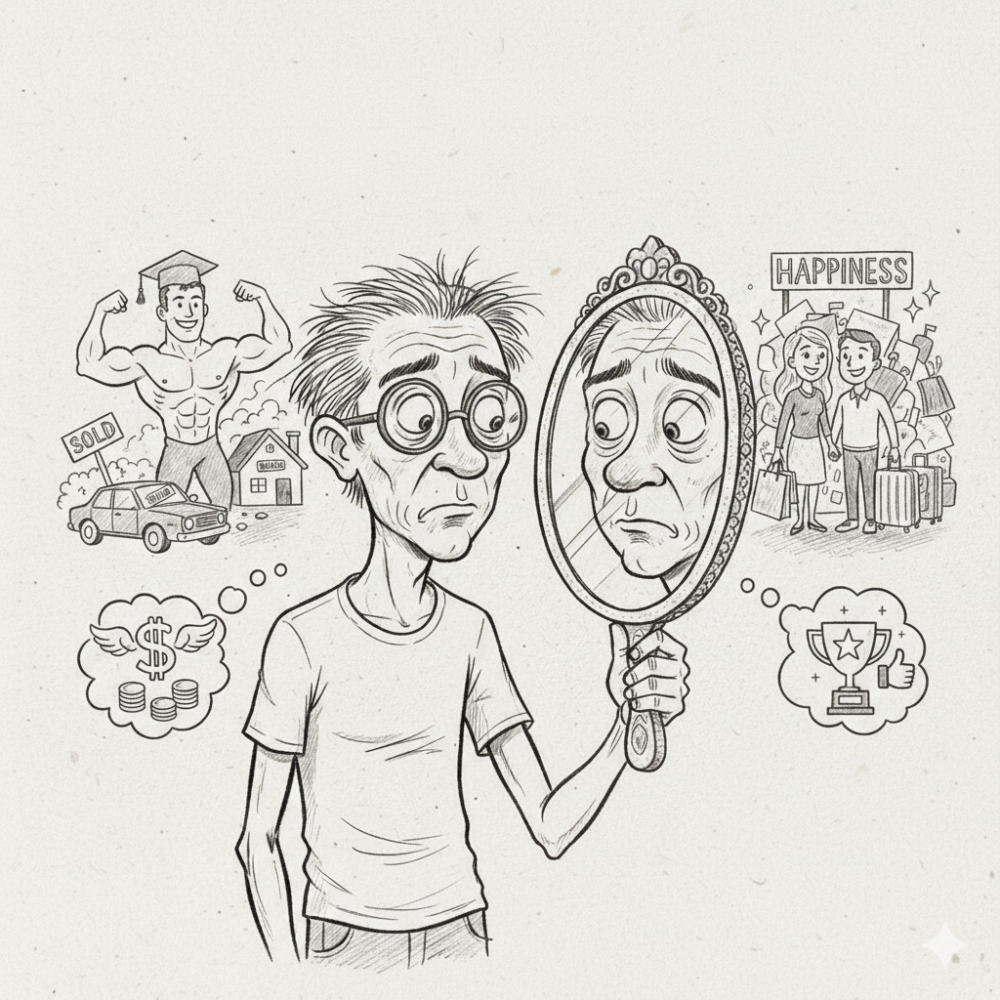
Endless feeds showcase curated triumphs. Promotions, vacations, milestones.
The mind compares its unfiltered reality to others’ edited highlights.
Highlight Reels Versus Behind-the-Scenes Realities
What remains unseen are the mundane struggles, the missteps, the ordinary days.
Comparison without context breeds inadequacy.
Comparison as a Catalyst for Negativity
Each comparison can subtly imply deficiency. “Not enough.” “Not there yet.”
Negativity accelerates.
The Power of Habitual Thought Patterns
Thoughts, repeated often enough, become traits.
Neural Pathways and Repetition
The brain strengthens pathways that are frequently used. Recurrent negative thinking deepens those neural grooves.
Practice makes permanent.
How Rumination Strengthens Negative Circuits
Rumination replays distressing scenarios, reinforcing emotional intensity.
It is rehearsal without resolution.
Why Positivity Requires Deliberate Practice
Positive thinking is not naïveté. It is training. It demands attention, intentionality, and repetition.
The Brain’s Preference for Problem-Solving
The mind is a solver. Problems attract it.
Why Problems Demand Attention More Than Pleasures
Pleasure signals satisfaction. Problems signal unfinished business.
The brain gravitates toward what remains unresolved.
The Unfinished Task Effect and Mental Tension
Incomplete tasks create cognitive tension. They occupy mental bandwidth until resolved.
Pleasure, once experienced, rarely demands follow-up.
The Psychology Behind “Fixing” Versus “Feeling”
Fixing feels productive. Feeling feels passive.
The brain prioritizes action over appreciation.
Trauma and Past Experiences
History lingers in subtle ways.
How Unresolved Experiences Resurface Quickly
Unprocessed events can resurface as intrusive thoughts or heightened sensitivity. The brain remains alert to similar patterns.
It seeks to prevent repetition.
The Brain’s Attempt to Protect Through Vigilance
Hypervigilance is often protective. It scans for echoes of past harm.
Protection, however, can morph into chronic suspicion.
When Old Narratives Shape Present Perceptions
Past experiences inform present interpretations. A prior rejection can color a neutral interaction.
The story continues unless rewritten.
Personality Traits and Temperament
Not all minds operate identically.
Are Some People Naturally More Prone to Negativity?
Temperament influences baseline outlook. Some individuals exhibit heightened sensitivity to potential threats.
It is disposition, not defect.
Introversion, Neuroticism, and Emotional Sensitivity
Traits such as neuroticism correlate with increased emotional reactivity. Introversion may foster deeper internal analysis.
Both can intensify negative reflection.
The Spectrum Between Optimism and Pessimism
Optimism and pessimism exist on a continuum. Most people fluctuate depending on context and stress.
No one is fixed at one extreme.
Biological and Chemical Factors
Mood is not purely philosophical. It is biochemical.
The Influence of Neurotransmitters on Mood
Neurotransmitters regulate emotional tone. Imbalances can predispose individuals to negative thinking.
Chemistry matters.
Dopamine, Serotonin, and Emotional Balance
Dopamine influences reward processing. Serotonin contributes to mood stability. When these systems falter, positivity may feel inaccessible.
Biology shapes perception.
Hormonal Fluctuations and Thought Speed
Hormonal changes can accelerate intrusive thoughts or intensify emotional responses.
The body and mind are inseparable.
Why Positive Thoughts Require More Effort
Negativity is automatic. Positivity is intentional.
Gratitude as a Conscious Practice
Gratitude redirects attention toward sufficiency rather than scarcity. It must be cultivated deliberately.
It rarely appears unprompted.
Reframing as a Cognitive Skill
Reframing involves interpreting events through alternative, constructive lenses.
It is mental craftsmanship.
The Discipline of Attention
Where attention goes, thought follows. Directing attention toward constructive narratives requires discipline.
Discipline reshapes default patterns.
The Feedback Loop Between Thought and Emotion
Thoughts and emotions are intertwined.
How Feelings Validate Negative Assumptions
If you feel anxious, the mind searches for reasons. It generates explanations that match the emotion.
Emotion becomes evidence.
Emotional Reasoning and Its Persuasive Power
Emotional reasoning assumes, “If I feel it, it must be true.”
The logic is compelling. It is also flawed.
Breaking the Loop with Awareness
Awareness creates space between thought and reaction. That space allows choice.
Choice slows the cascade.
The Impact on Mental Health
Negativity is natural. Chronic negativity is not.
When Normal Negativity Becomes Chronic
Persistent negative thinking can erode well-being, relationships, and productivity.
It shifts from adaptive to maladaptive.
Links to Anxiety and Depressive Disorders
Excessive rumination and pessimism are strongly associated with anxiety and depression.
Early recognition is crucial.
Early Signs That Negative Thinking Is Taking Over
Constant self-criticism. Difficulty experiencing joy. Persistent worst-case scenarios.
These are signals, not verdicts.
Strategies to Slow Down Negative Thoughts
Change is possible. It begins with awareness.
Cognitive Restructuring Techniques
Identify distorted thoughts. Challenge their validity. Replace them with balanced alternatives.
Interrogate the narrative.
Mindfulness and Present-Moment Awareness
Mindfulness trains attention to observe thoughts without immediate identification.
Observation diminishes intensity.
Building Mental Resilience Over Time
Resilience develops through repeated practice—healthy habits, supportive relationships, restorative routines.
It is cumulative.
Training the Brain Toward Balance
The brain remains plastic throughout life.
Neuroplasticity and Hope
Neural pathways can be reshaped through consistent experience. Repetition of constructive thoughts strengthens alternative circuits.
Hope is grounded in biology.
Small Daily Habits That Rewire Thinking
Journaling. Gratitude lists. Balanced self-talk. Brief pauses before reacting.
Small acts compound.
The Compound Effect of Consistent Positivity
Minor shifts, sustained over time, recalibrate the mind’s default orientation.
Gradually, positivity accelerates too.
Conclusion: Understanding the Speed, Reclaiming the Direction
Negative thoughts may arrive first. They need not stay longest.
Accepting the Brain’s Wiring Without Being Ruled by It
Acknowledging the brain’s bias reduces shame. The mind evolved for survival, not serenity.
Understanding this is liberating.
Turning Awareness Into Intentional Mental Habits
Awareness creates agency. Agency enables practice. Practice builds new patterns.
The shadow mind may be swift—but direction remains a choice.