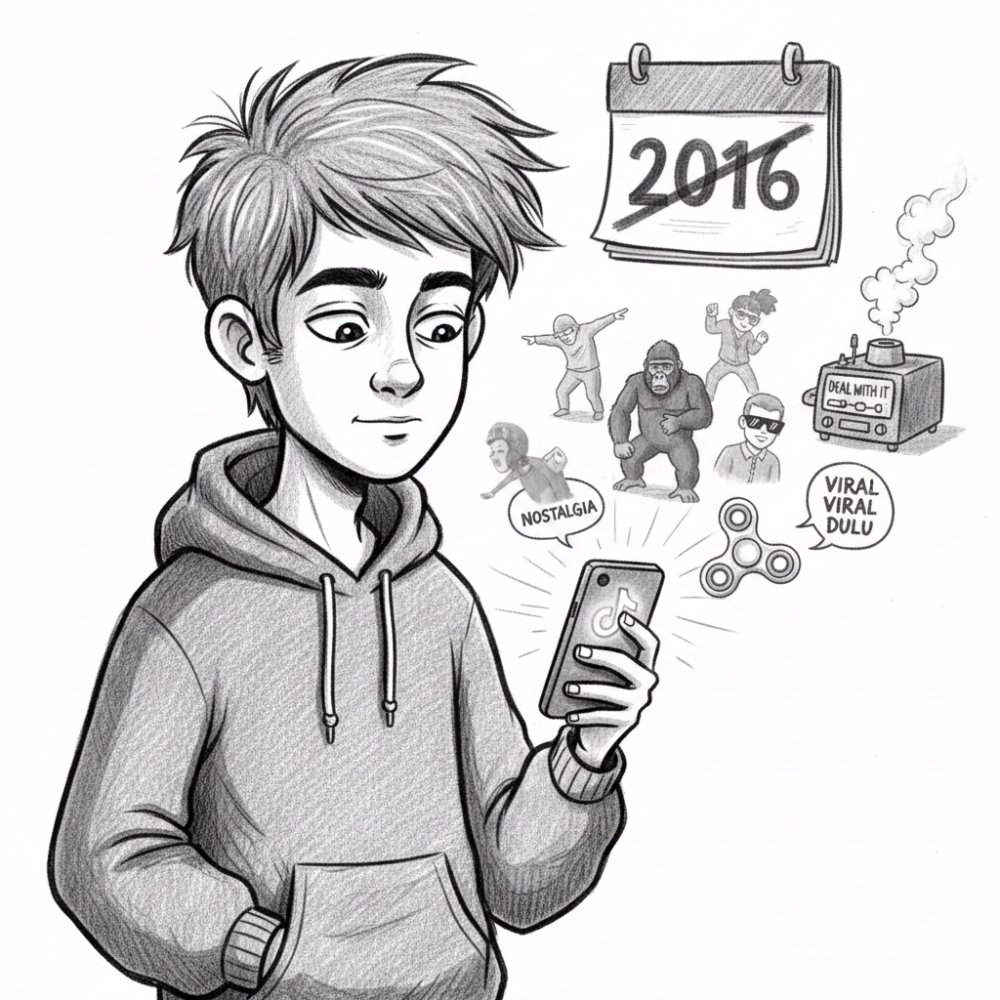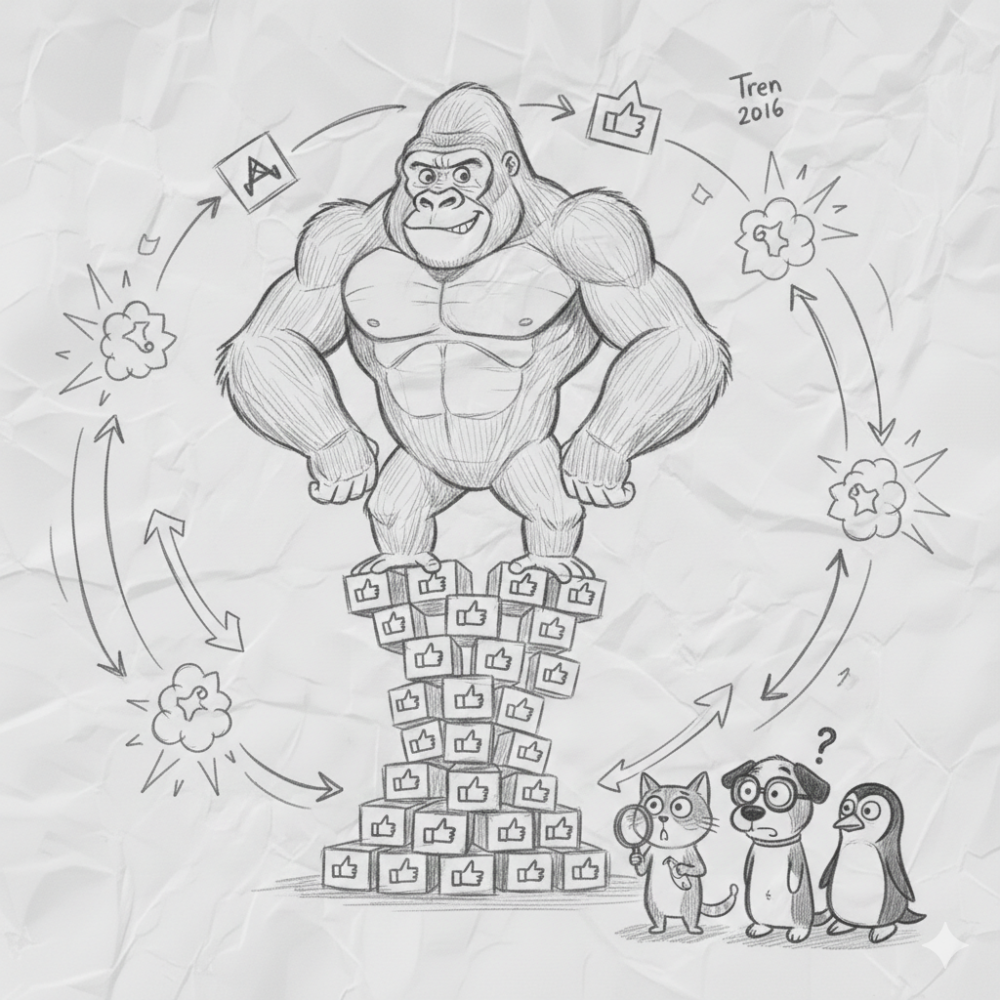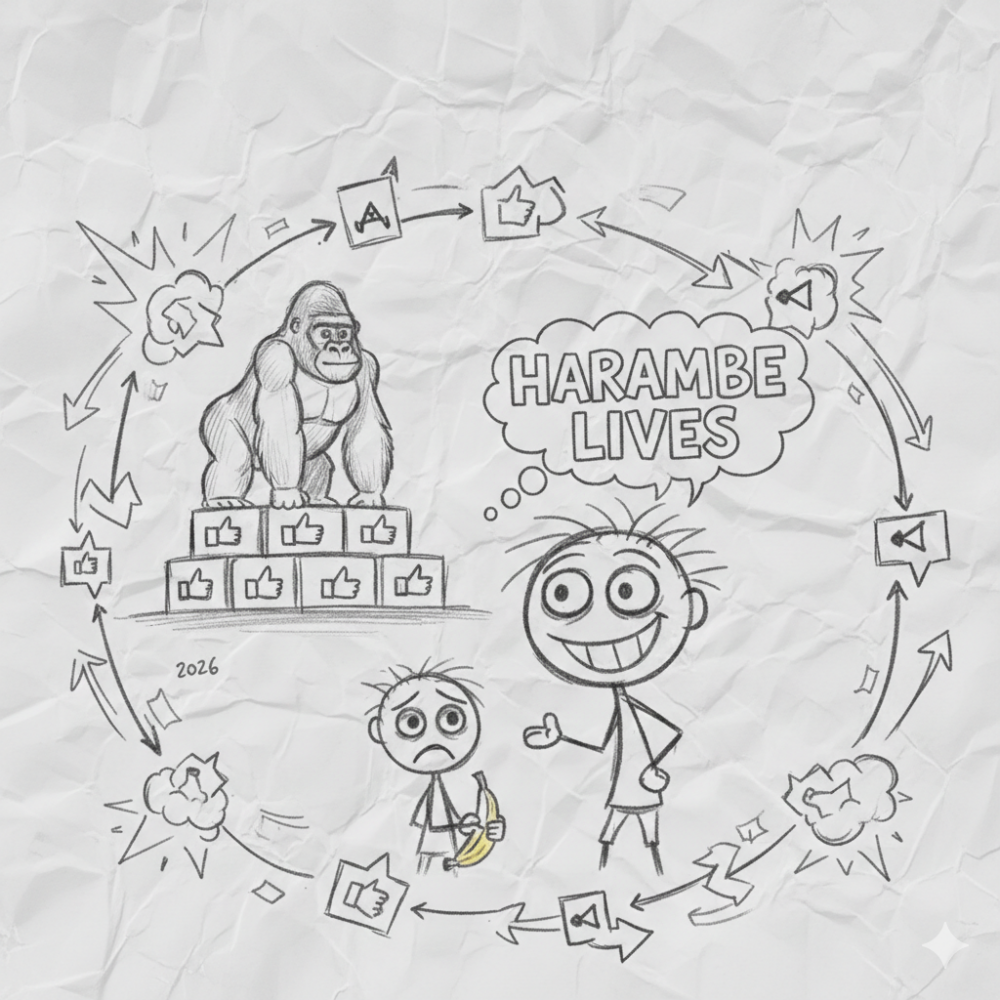
The internet has a peculiar relationship with time. Trends vanish overnight, platforms rise and fall, and yet certain jokes linger like cultural ghosts. Every so often, one of them reappears—unchanged, unmistakable, and somehow perfectly suited to a new era. A simple meme from 2016 has done exactly that, resurfacing across feeds and timelines in 2026 as if it never truly left.
Its return raises a curious question. Why does a joke born a decade ago feel so relevant now? In a digital landscape defined by acceleration and excess, the past is quietly staging a comeback.
The Meme in Question: Simple, Absurd, and Instantly Recognizable
The meme itself is disarmingly plain. A static image. A blunt caption. Often a deliberately awkward juxtaposition of text and visual that feels almost unfinished. There are no intricate edits or cinematic flourishes—just a concise setup and an immediate punchline.
That stark simplicity was its secret weapon from the beginning. It required no explanation and no context beyond a shared sense of everyday frustration or irony. Anyone could understand it at a glance. Anyone could adapt it. In an internet now saturated with complexity, that restraint feels almost radical.
Tracing the Meme’s 2016 Origins
To understand its staying power, it helps to revisit the internet of the mid-2010s. This was a time when platforms still felt experimental and humor was largely unfiltered. Twitter thrived on screenshots and one-liners. Tumblr fostered surrealism. Instagram had not yet fully surrendered to video.
The meme first circulated in these spaces, spreading organically through reblogs, retweets, and reposts. Online humor at the time leaned heavily toward self-deprecation and observational wit. It was less about performance and more about recognition—a collective nod that said, “Yes, this feeling again.”
Why 2016 Was a Golden Era for Memes
Before algorithms dictated reach with surgical precision, the internet felt chaotic in the best way. Content traveled because people liked it, not because it was optimized. Memes were messy, occasionally nonsensical, and deeply personal.
Relatable humor dominated over hyper-polished visuals. Timelines felt communal rather than competitive. There was less pressure to monetize attention and more freedom to experiment. That environment allowed simple ideas to flourish without being immediately commodified.
Dormant but Not Forgotten: The Meme’s Quiet Years
As newer formats took over, the meme gradually receded from prominence. It did not disappear, however. It lingered in private group chats, niche forums, and the far corners of social media.
Screenshots preserved it. Meme archives cataloged it. Occasional reposts sparked brief flickers of recognition. Like a song heard faintly through a wall, it remained present without demanding attention.
The Viral Comeback: How the Meme Returned to the Spotlight
Its resurgence did not begin with a coordinated revival. Instead, it emerged quietly—one post gaining traction, one remix striking a chord. A single creator recontextualized it for a modern moment, and the reaction was immediate.
The timing mattered. Cultural fatigue was setting in. Audiences were primed for something familiar yet flexible. The meme arrived at precisely the right moment to feel both nostalgic and new.
TikTok, Reels, and the New Meme Machine
Short-form video platforms transformed the meme from a static image into a mutable template. Screenshots became punchlines. Captions turned into voiceovers. Irony was amplified through exaggerated pauses and deliberate awkwardness.
Gen Z creators, often fluent in layered humor, embraced the meme as a relic worth repurposing. Its very datedness became part of the joke. What once felt earnest now felt knowingly absurd.
Irony on Irony: How the Meme’s Meaning Has Shifted
Originally, the meme communicated a straightforward sentiment. Today, it operates on multiple levels. It is sincere and sarcastic. Nostalgic and critical.
Audiences now read it with an added layer of self-awareness. Sharing the meme is not just about the joke—it is about acknowledging the act of sharing it. Irony folds in on itself, creating a recursive loop of meaning.
Nostalgia as Fuel: The Internet’s Favorite Emotion
Nostalgia has become one of the most potent currencies online. In uncertain times, familiar content offers reassurance. The internet of 2016, untouched by later upheavals, carries a particular emotional weight.
Scrolling through revived memes feels like returning to a quieter version of the web. It is comfort content, disguised as humor.
Relatability Never Expires
At its core, the meme succeeds because it taps into a universal feeling. Mild exasperation. Existential confusion. The humor of things not going as planned.
These experiences transcend age and platform. A decade later, the joke still lands because the conditions that inspired it remain stubbornly unchanged.
Minimalism vs. Maximalism in Meme Culture
Modern meme culture often leans toward maximalism—rapid cuts, dense references, elaborate edits. Against that backdrop, the meme’s minimalism feels refreshing.
Its lo-fi aesthetic signals authenticity. It suggests that humor does not require spectacle. Sometimes, restraint is the most effective punchline.
Screenshots, Captions, and Endless Variations
Creators continue to adapt the meme in inventive ways. New captions reflect contemporary anxieties. Visuals are swapped, inverted, or deliberately degraded.
This flexibility is crucial. A meme that can evolve without losing its essence is far more likely to endure.
Cross-Platform Spread: From One App to Everywhere
Once revived, the meme moved quickly. TikTok to Instagram. Instagram to Twitter. Twitter to group chats.
Repost accounts accelerated the process, compressing what once took months into days. Virality now travels at a velocity that leaves little room for gradual discovery.
Internet Cycles: Why Memes Always Come Back
Online culture is cyclical by design. Younger users encounter old jokes as new discoveries. Older users experience them as echoes.
Repetition is not a flaw. It is how digital culture maintains continuity across generations.
Millennials vs. Gen Z: A Shared Meme Moment
The meme’s return has created an unusual overlap. Millennials recognize it immediately. Gen Z reinterprets it effortlessly.
Comment sections become cultural crossroads, filled with explanations, reinterpretations, and playful debates. Humor becomes a shared language rather than a dividing line.
Brands and the Temptation to Join In
Predictably, brands have noticed. Some attempts to participate feel organic. Most feel forced.
Corporate adoption carries risk. Overexposure can drain a meme of its subversive charm, transforming it into marketing collateral.
What This Revival Says About Internet Culture Today
The meme’s popularity reflects a broader mood. Digital exhaustion. A desire for sincerity masked by humor.
Looking backward has become a way to cope with the present. Memes function as emotional barometers, registering shifts in collective sentiment.
Will the Meme Stick Around This Time?
Its longevity remains uncertain. Overuse could dull its impact. Algorithmic saturation could accelerate burnout.
Virality is volatile. What feels omnipresent today may vanish tomorrow.
The Bigger Picture: Memes as Living History
Beyond the joke, the meme serves as a cultural artifact. It documents how people felt, thought, and laughed at a particular moment.
In their simplicity, memes capture complex emotions with surprising precision. They form an unofficial archive of digital life.
Conclusion: Same Meme, New Moment
The return of this 2016 meme feels less like a novelty and more like a reflection. It fits because the internet, despite all its changes, remains deeply human.
Its revival reveals something enduring about humor and memory. Some jokes do not age out. They wait patiently for the moment they are needed again.