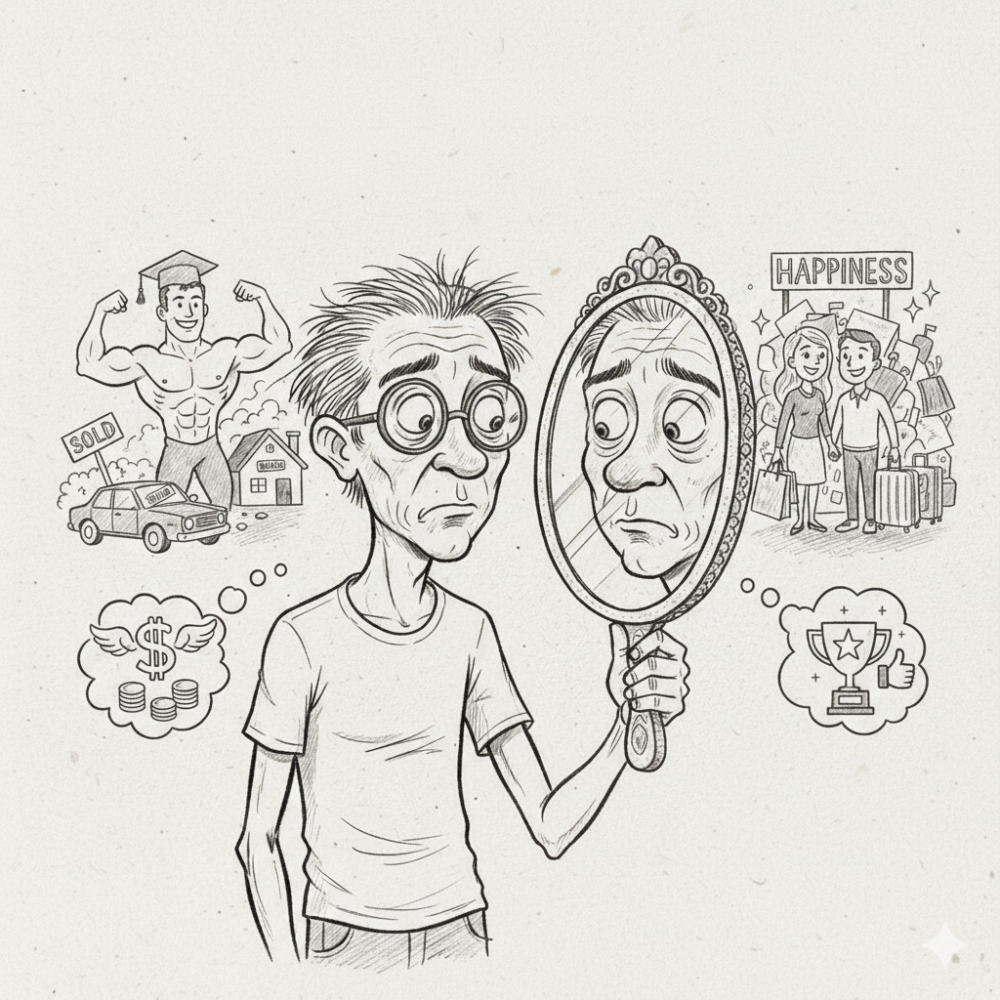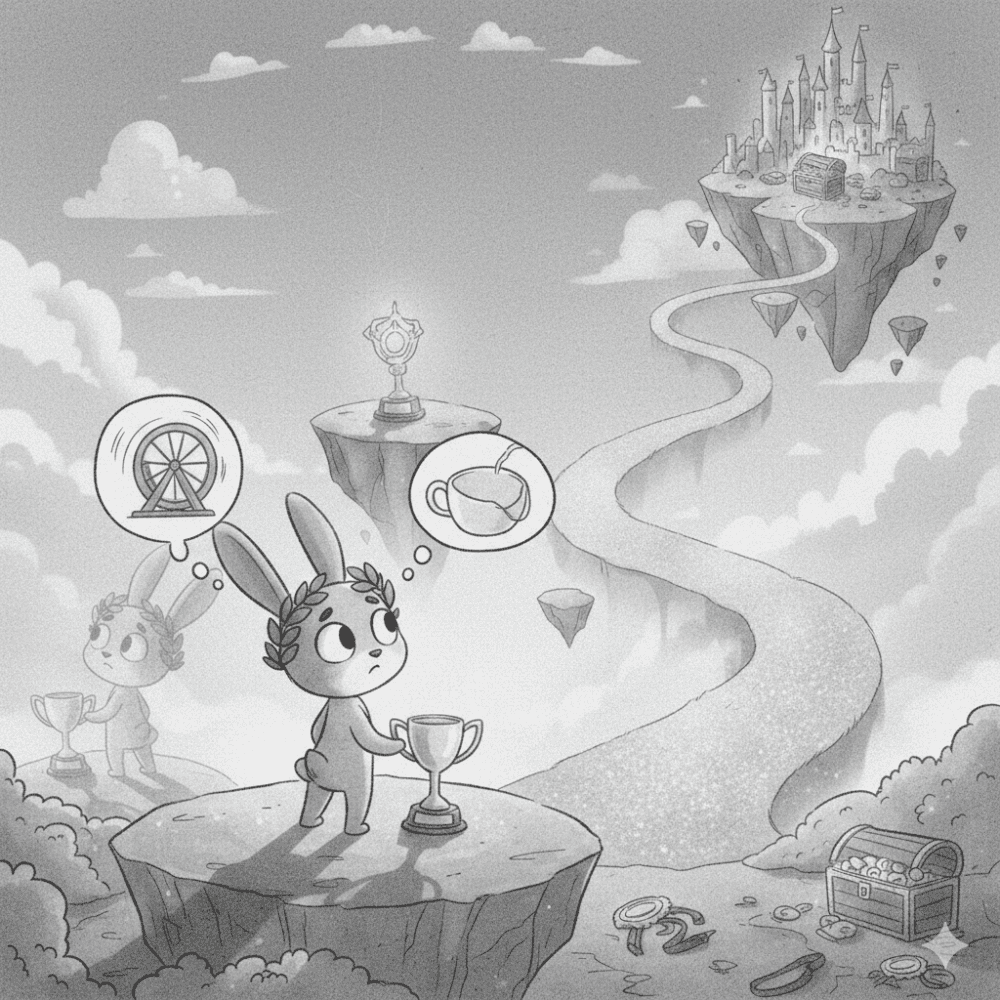
The Quiet Discomfort Behind Success
Achievement is often portrayed as a crescendo—confetti in the air, applause echoing, a triumphant smile fixed in place. Yet in quieter moments, many high achievers confess to something far less cinematic. A hollow pause. A subtle ache. A sense that something is missing.
Success, paradoxically, can feel unsettling.
When “I Did It” Doesn’t Feel Like Enough
You reach the milestone. The degree is framed. The promotion letter arrives. The project launches. You whisper, “I did it.”
And then, almost immediately, a disquieting thought intrudes: Is this all?
The emotional payoff seems strangely muted. The euphoria you anticipated dissolves into a mild, almost bureaucratic satisfaction. It is not that the achievement is insignificant. It’s that the internal celebration never quite ignites.
The Surprising Emotional Gap Between Achievement and Fulfillment
Achievement is objective; fulfillment is subjective. One can be measured in metrics and milestones. The other resides in meaning.
When these two fail to align, a dissonance emerges. We may possess evidence of success, yet feel curiously unfulfilled. It is a gap rarely discussed, but widely experienced—a silent paradox of modern ambition.
The Moving Target Syndrome
Ambition has a peculiar elasticity. It stretches. It expands. And it rarely rests.
Why the Finish Line Keeps Shifting Just as We Arrive
The moment we cross one finish line, another materializes on the horizon. The brain recalibrates with astonishing speed. What once seemed extraordinary becomes expected.
The promotion becomes the new baseline. The completed marathon becomes a prelude to the next race. We are perpetually in transit, seldom stationary long enough to savor arrival.
How Constant Goal Escalation Dilutes Satisfaction
Escalating goals can be invigorating, but they can also erode contentment. Each new objective subtly diminishes the previous one.
Without intentional pauses, achievement morphs into a conveyor belt—productive, efficient, but emotionally sterile.
The Comparison Trap
Comparison is ancient. Social media simply industrialized it.
Measuring Our Wins Against Everyone Else’s Highlight Reel
We do not compare our raw footage to others’ raw footage. We compare it to their curated montage.
A colleague’s promotion announcement. A friend’s entrepreneurial triumph. A stranger’s pristine home office. These fragments create an illusion of universal momentum—everyone advancing faster, higher, better.
Social Media and the Illusion of Effortless Success
Digital platforms present achievement without context. The sleepless nights, the failures, the doubts—these are edited out.
What remains is a glossy narrative of seamless ascent. Exposure to this constant stream can render our own hard-earned progress mundane by comparison.
When Someone Else’s Milestone Shrinks Our Own
It is possible to feel pride and inadequacy simultaneously. A personal milestone may feel significant—until someone else achieves something grander.
In that instant, our triumph contracts. Not because it has changed, but because perspective has.
Perfectionism: The Achievement Saboteur
Perfectionism masquerades as excellence. In reality, it often corrodes joy.
The Tyranny of “It Could Have Been Better”
Instead of celebrating what went right, the perfectionist scans for imperfections. A minor flaw eclipses a major success.
The internal monologue is relentless: You missed one detail. You could have tried harder.
Why Flawless Standards Leave No Room for Joy
When standards are impossibly high, satisfaction becomes mathematically improbable. There is always a higher rung, a more refined version, a superior outcome.
Joy requires permission. Perfectionism rarely grants it.
The Hidden Fear Behind Perfectionist Thinking
Beneath the pursuit of flawlessness often lies fear—fear of criticism, of inadequacy, of losing status.
If nothing is ever “good enough,” one never risks complacency. But one also never experiences peace.
Impostor Syndrome and Self-Doubt
Success can amplify doubt rather than silence it.
Feeling Like a Fraud Even After Tangible Success
Impostor syndrome whispers that achievements are accidents. That recognition is mistaken. That exposure is imminent.
The diploma, the award, the accolade—none seem sufficient to quiet the internal skeptic.
Discounting Hard Work as “Luck” or “Timing”
Hard work is reinterpreted as fortunate timing. Skill becomes coincidence. Persistence becomes serendipity.
This cognitive distortion robs achievement of its rightful authorship.
Why External Validation Rarely Silences Internal Doubt
Praise from others may momentarily soothe insecurity. Yet external validation is ephemeral.
If self-trust is absent, applause echoes briefly and fades.
The Hedonic Adaptation Effect
Human beings are neurologically wired to adapt.
How the Brain Quickly Normalizes Big Wins
Neuroscientists describe a phenomenon in which emotional spikes—positive or negative—eventually stabilize. The dream job becomes routine. The new house becomes familiar.
What once exhilarated now feels ordinary.
Why Yesterday’s Dream Becomes Today’s Baseline
Aspirations, once achieved, recalibrate expectations. Yesterday’s ambition becomes today’s assumption.
The bar rises. Quietly. Persistently.
Cultural and Familial Conditioning
Our relationship with achievement rarely forms in isolation.
Growing Up with Achievement as Expectation, Not Celebration
In some environments, accomplishment is the minimum requirement rather than a milestone worthy of praise.
Good grades are expected. Success is standard. Celebration is optional—or absent.
When Praise Was Scarce or Conditional
Conditional affirmation teaches a subtle lesson: worth is contingent. Achievement becomes a means of securing approval rather than a source of intrinsic pride.
The Pressure to Always “Do Better”
“Good” is met with “What’s next?” Over time, improvement becomes obligation rather than inspiration.
The Productivity Obsession
Modern culture venerates busyness.
When Worth Becomes Tied to Output
Productivity morphs into identity. The more one produces, the more one feels valuable.
Rest, by contrast, appears suspicious.
Why Rest Feels Like Failure
Pausing can trigger guilt. Inactivity can feel like regression. The internal calculus equates motion with meaning.
The Endless Pursuit of Being “More”
The pursuit is infinite. Satisfaction struggles to survive in such terrain.
Fear of Complacency
Contentment is often misconstrued as stagnation.
The Belief That Satisfaction Equals Stagnation
Some fear that acknowledging success will dull ambition. That pride will breed laziness.
Thus, satisfaction is postponed—indefinitely.
How Ambition and Contentment Seem at Odds
In truth, ambition and contentment can coexist. But culturally, they are often framed as adversaries rather than allies.
Emotional Suppression and Delayed Gratification
We are taught to endure. To push. To delay pleasure.
Postponing Celebration Until the “Next Big Thing”
Celebration is deferred. “I’ll enjoy this after the next milestone.” But the next milestone arrives, and the pattern repeats.
Difficulty Sitting with Positive Emotions
For some, positive emotions feel unfamiliar or even uncomfortable. Pride may evoke vulnerability. Joy may feel indulgent.
The Spotlight on What’s Missing
The human brain evolved to detect threats. Unfortunately, it also detects deficits.
Fixating on Flaws Instead of Progress
Rather than catalog progress, we catalog shortcomings. One oversight can eclipse nine accomplishments.
The Brain’s Negativity Bias in Action
This negativity bias once enhanced survival. Today, it often undermines satisfaction.
External Validation Dependence
Approval can become addictive.
Waiting for Applause Before Feeling Proud
If pride depends on external acknowledgment, silence can feel like failure—even when success is evident.
When Praise Feels More Real Than Personal Pride
External praise may feel authoritative. Self-recognition may feel suspect. Over time, internal validation atrophies.
The Myth of the Big Break
We romanticize seismic success.
Believing Only Massive Achievements Truly Count
We revere the breakthrough moment—the viral launch, the overnight success. Smaller victories seem trivial by comparison.
Overlooking the Power of Incremental Progress
Yet most mastery unfolds incrementally. Quietly. Persistently. Incremental progress is less glamorous, but often more transformative.
Burnout and Emotional Exhaustion
Achievement extracted at high cost can feel hollow.
When Success Arrives After Depletion
If the journey required chronic stress, sleep deprivation, or emotional strain, the outcome may feel anticlimactic.
Why Achievement Feels Hollow Without Energy
Satisfaction requires vitality. Without energy, even success feels muted.
Identity and Self-Worth Confusion
Achievement can become a surrogate for identity.
Tying Who We Are to What We Accomplish
When self-worth fuses with performance, failure becomes existential. Even success feels precarious.
The Fragility of Achievement-Based Identity
If identity rests solely on accomplishment, it remains perpetually unstable. One setback can threaten the entire structure.
The Lack of Meaning Behind the Goal
Not all goals are self-authored.
Chasing Goals That Were Never Truly Ours
Societal scripts, parental expectations, and peer comparisons often dictate ambition. When the goal is external, fulfillment is elusive.
When Achievement Doesn’t Align with Values
Alignment breeds satisfaction. Misalignment breeds ambivalence. One can achieve brilliantly and still feel misplaced.
Cognitive Distortions That Minimize Success
The mind is adept at distortion.
All-or-Nothing Thinking
Anything short of perfection feels like failure. Nuance disappears.
Moving the Goalposts
Standards shift retroactively, ensuring satisfaction remains just out of reach.
Disqualifying the Positive
Achievements are dismissed as insignificant, expected, or undeserved.
The Silence After the Applause
There is often a lull after triumph.
The Post-Achievement Emotional Dip
After intense focus, the nervous system downshifts. What follows can feel like emptiness rather than elation.
Why Big Milestones Can Trigger Unexpected Sadness
Major milestones sometimes close chapters. Endings, even celebratory ones, can evoke subtle grief.
The Role of Gratitude and Reflection
Satisfaction rarely appears spontaneously. It must be cultivated.
How Pausing to Reflect Changes the Emotional Outcome
Reflection consolidates achievement. It allows the mind to integrate effort, growth, and resilience into a coherent narrative.
Building a Practice of Recognizing Progress
Regular acknowledgment of progress—however modest—counteracts the perpetual forward thrust.
Conclusion: Making Peace with Achievement
Feeling unsatisfied after success is not a personal failing. It is a complex interplay of psychology, culture, conditioning, and cognition.
Allowing Ourselves to Feel Proud
Pride is not arrogance. It is acknowledgment of effort, resilience, and growth.
Embracing Growth Without Rejecting Satisfaction
Growth propels us forward. Satisfaction grounds us.
We need both.