The Great Acceleration: Why Our Internal Clocks Speed Up After Thirty
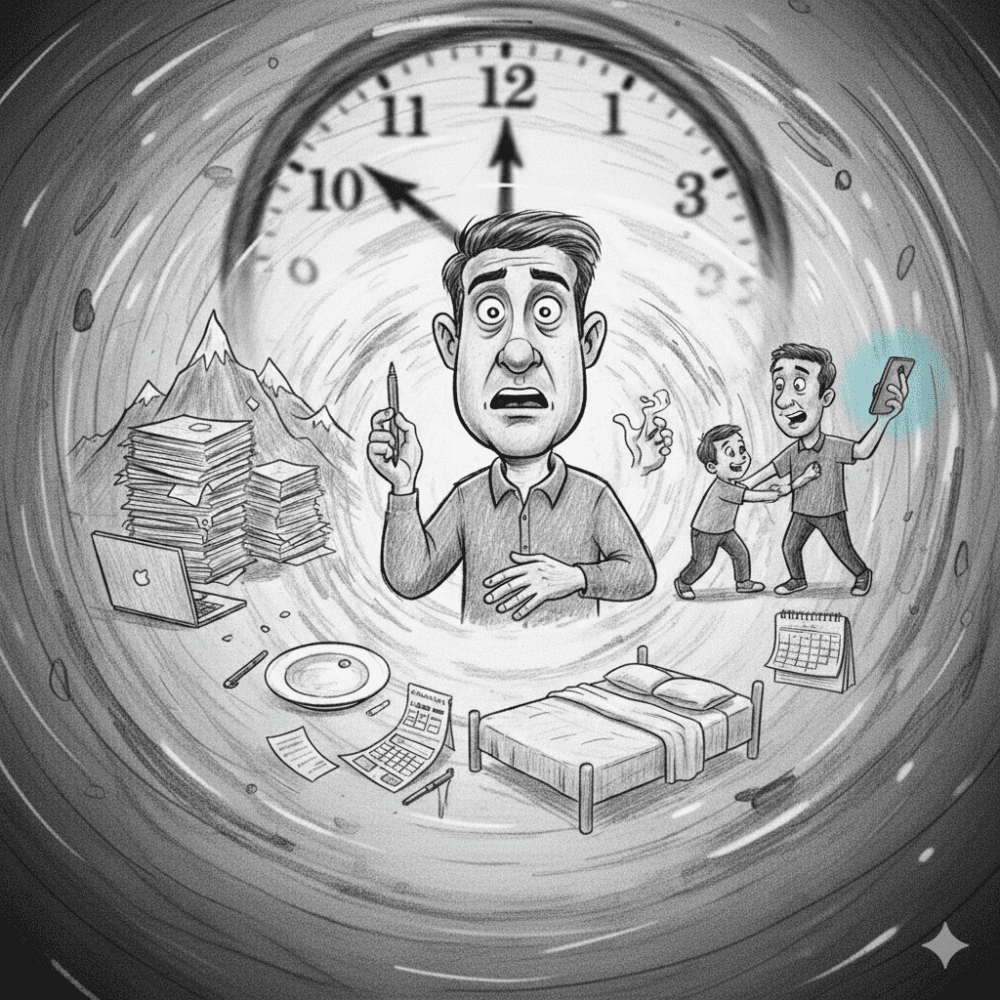
There is a collective, unspoken realization that strikes most humans as they crest the hill of their third decade: the calendar has developed a leak. What once felt like a steady, rhythmic march of days begins to resemble a frantic gallop toward the horizon. This psychological velocity isn’t just a figment of your imagination; it is a documented cognitive shift. As we transition from the discovery-laden years of youth into the structured corridors of midlife, our internal metronome undergoes a profound recalibration.
The Childhood Illusion of the Endless Summer
Cast your mind back to the sprawling vista of a childhood July. To a ten-year-old, a single summer represents a massive epoch of existence. Time in youth is dense, textured, and seemingly inexhaustible because everything is a debut. When the brain is constantly encoding novel stimuli—the scent of pool chlorine, the physics of a bicycle, the intricate social hierarchy of the playground—it creates rich, detailed memories. These “thick” memories expand our retrospective perception of time, making a three-month break feel like a lifetime.
Why 365 Days Feels Like a Blink in Adulthood
For the adult, the year has lost its grandeur. We find ourselves saying, “I can’t believe it’s already December,” with a frequency that borders on the ritualistic. This occurs because the milestones that once anchored our timeline have been replaced by a repetitive loop. When the brain isn’t challenged by new landscapes or profound shifts in lifestyle, it stops “time-stamping” individual days. The result is a temporal blur where months are compressed into a single, indistinguishable unit of survival and labor.
The Proportionality Theory: When One Year is a Smaller Slice of the Pie
One of the most compelling explanations for this shift is purely mathematical. To a five-year-old, a single year is a staggering 20% of their entire lived experience. It is a massive, dominant piece of their personal history. Conversely, to a fifty-year-old, that same year is a mere 2% of their life. As we age, each new unit of time is compared against an ever-growing accumulation of the past, making the present feel incrementally less significant and, consequently, much faster.
The Math of Aging: How $T = 1/n$ Explains Your Missing Months
If we view time through a logarithmic lens, the acceleration becomes even clearer. Using the formula where $T$ represents the perceived length of a year and $n$ is your current age, we see a diminishing return on temporal value. As $n$ increases, the subjective duration of $T$ shrinks. This inverse relationship suggests that the perceived interval between ages 10 and 20 is actually equal to the interval between 40 and 80. We are essentially living through a tightening spiral of perception.
The Tyranny of the Routine: Why Monotony Erases Memory
Routine is the silent killer of time. When we enter a state of habitual automation—the same commute, the same desk, the same Tuesday night takeout—the brain switches to “low-power” mode. Neurobiologically, we stop recording the mundane details because they offer no survival advantage. If your brain doesn’t bother to create a unique memory file for a day, that day effectively disappears from your internal timeline. You haven’t lost the time; you simply failed to save the data.
The “First-Time” Phenomenon: Why New Experiences Stretch Time
Think of the last time you visited a foreign city. The first 48 hours likely felt incredibly long because your senses were on high alert, absorbing unfamiliar architecture and strange languages. This is the “first-time” phenomenon. High-intensity learning forces the brain to process information at a higher resolution. When we are novices, time dilates. When we become experts in our own lives, time contracts.
Neuroplasticity and the Speed of Information Processing
Our biological hardware plays a role in this temporal heist. In youth, the brain is a hyper-plastic sponge, firing signals across synapses with lightning speed. As we age, the neural pathways become more insulated and fixed. Some researchers suggest that the actual speed at which we process visual imagery slows down over the decades. Because we are “capturing” fewer frames per second as we get older, time appears to move faster, much like a film played at the wrong frame rate.
The Brain’s Efficiency Trap: How Doing Less Thinking Makes Time Fly
The human brain is an energy-saving machine. It constantly seeks to build “chunks”—mental shortcuts that allow us to perform complex tasks without active thought. While this efficiency is great for productivity, it is disastrous for our sense of duration. By automating our lives, we bypass the conscious processing that gives time its weight and substance. We are, quite literally, thinking our way into a faster grave.
The Cognitive Load of “The Daily Grind”
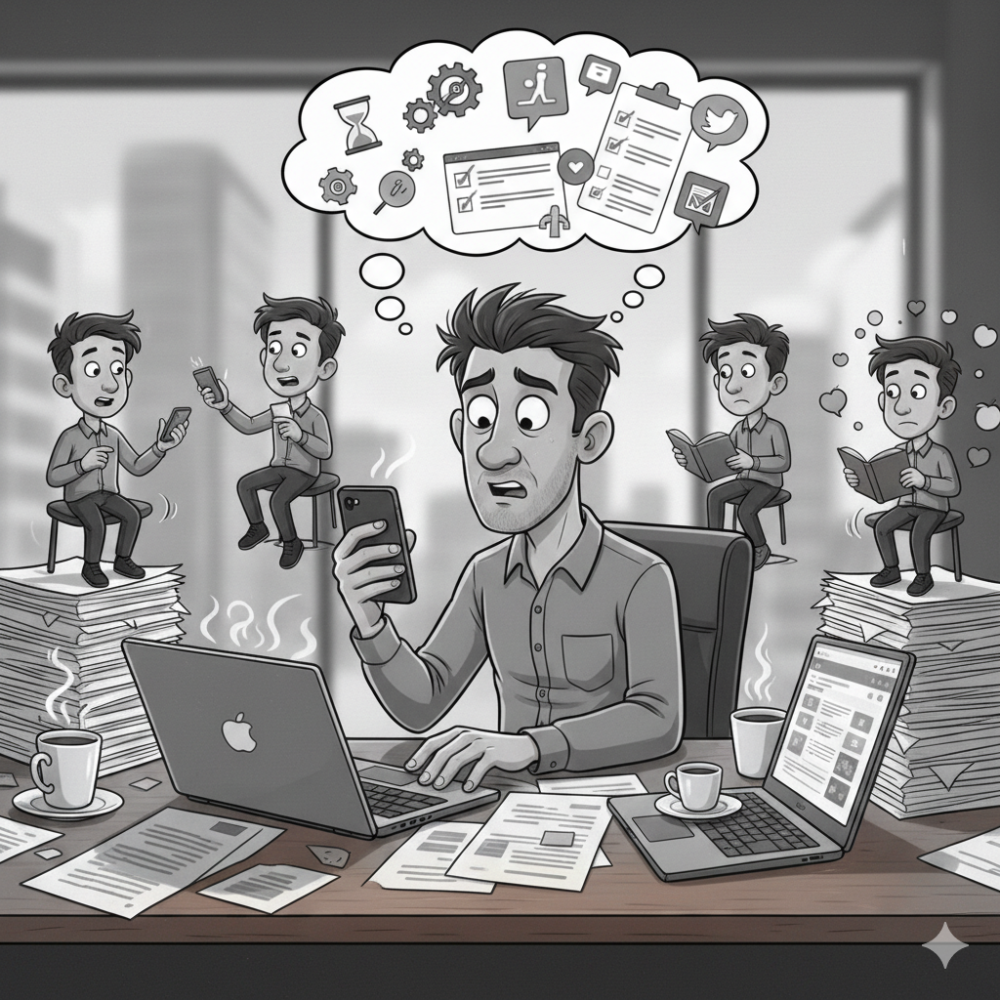
It is a cruel irony that the more we have to do, the less time we seem to have. The modern “daily grind” involves a high cognitive load—managing budgets, navigating office politics, and juggling household logistics. When the mind is constantly occupied with “future-planning,” it is never truly present. This perpetual state of mental multitasking prevents the deep engagement required to anchor ourselves in the current moment.
Why We Stop Paying Attention to the Details
When was the last time you truly looked at the bark of a tree or noticed the specific hue of the morning sky? As adults, we trade wonder for utility. We see a tree and categorize it as “foliage” or “yard work.” This loss of granular attention means we are experiencing life in a low-resolution format. The fewer details we register, the faster the stream of life flows past us, unhindered by the friction of observation.
The “Forward-Looking” Trap: Living for the Next Big Milestone
Many adults live in a state of “anticipatory skipping.” We spend Monday wishing for Friday, and February wishing for June. By constantly projecting our consciousness toward a future event, we treat the intervening time as an obstacle to be overcome. When you spend your life waiting for the next big thing, the “right now” becomes a disposable commodity, accelerating your journey toward the end of the calendar.
How Digital Distractions and Constant Connectivity Warp Our Perception
The digital age has introduced a new kind of temporal fragmentation. The “infinite scroll” of social media creates a state of “time-porosity,” where hours vanish into a vacuum of dopamine-seeking behavior. Because digital content is designed to be ephemeral and rapid-fire, it prevents the formation of lasting episodic memories. We emerge from a two-hour browsing session feeling as though only minutes have passed, yet having nothing to show for it in our mental archives.
The Biological Clock: Do Our Neurons Literally Slow Down?
Beyond psychology, there is a physiological component to the quickening. Our metabolic rates slow as we age. Heart rates and breathing patterns change. Some theorists propose that our internal pacemaker is linked to these biological rhythms. If our internal “clock” slows down, the external world—including the ticking of a physical clock—appears to speed up relative to our internal state.
Dopamine and the Perception of Duration
Dopamine is not just the chemical of pleasure; it is a key regulator of time perception. When we are excited or learning, dopamine levels spike, which can lead to “time dilation” during the event. However, as we age, our baseline dopamine levels and the density of our receptors tend to decline. This neurochemical thinning may contribute to a flatter, faster experience of the passing weeks.
The Holiday Paradox: Why Vacations Feel Long While Happening but Short in Retrospect
This is the great contradiction of travel. While you are on a novel, exciting trip, time may feel like it is slowing down because you are processing so much new information. However, when you return home, the trip feels like a tiny blip in your memory. This is because the “density” of the experience makes it stand out as a single, discrete unit, whereas the weeks of boring work around it are so empty they seem to occupy more “space” in your long-term memory.
The “Telescoping Effect”: Why Events from Five Years Ago Feel Like Last Week
Have you ever been shocked to realize a “recent” movie was actually released a decade ago? This is the telescoping effect. As the volume of our memories increases, the brain struggles to accurately place events on a linear timeline. We “telescope” older memories forward, making them seem more recent than they are, which creates a frightening sense that time is slipping through our fingers at an uncontrollable rate.
Stress, Cortisol, and the Compressed Work Week
Chronic stress is a powerful temporal compressor. High levels of cortisol keep us in a state of “narrow focus,” where we are only concerned with immediate threats or deadlines. This tunnel vision prevents us from experiencing the “breadth” of time. In a high-stress environment, weeks disappear into a blur of survival, leaving us wondering where the month went when we finally pause to breathe on a Saturday morning.
Reminiscence Bumps: Why We Remember Our Youth More Vividly Than Our Forties
Sociologists and psychologists point to the “reminiscence bump”—the tendency for older adults to have increased recollection of events that occurred during their adolescence and early adulthood. This period is dense with “firsts”: first love, first job, first home. Because these memories are so vivid, they take up more psychological “real estate,” making the more recent, less eventful decades feel like a fast-forwarded sequence in comparison.
Reclaiming the Hours: Strategies to Put the Brakes on Time
While we cannot stop the Earth’s rotation, we can alter our subjective experience of it. The key to slowing down time is to reintroduce “friction” into our lives. By consciously fighting the urge to automate and hide in routine, we can force our brains to start recording again. It requires an active effort to move from a state of passive consumption to one of active engagement.
Mindfulness as a Temporal Anchor
Mindfulness is often dismissed as a buzzword, but in the context of time perception, it is a vital tool. By focusing intensely on the present moment—the texture of food, the sound of the wind, the physical sensations of the body—we increase the “bitrate” of our experience. This high-definition living creates more mental data points, which, in retrospect, makes the day feel much longer and more substantial.
Breaking the Cycle: How Introducing Novelty Restores the “Long Year”
The most effective way to slow time is to pursue novelty. This doesn’t require jumping out of airplanes; it can be as simple as taking a new route to work, learning a difficult skill, or visiting a neighborhood you’ve never explored. By forcing the brain out of “autopilot,” you trigger the encoding of new memories. A year filled with new challenges will always feel longer than a year of comfortable repetition.
The Power of Documenting Life to Slow Down the Blur
Writing in a journal or taking intentional photographs serves as an external hard drive for our memories. When we review these records, we “re-expand” the time we lived through. It provides a narrative structure that prevents the months from collapsing into a single, forgotten heap. Documentation forces us to reflect, and reflection is the enemy of temporal acceleration.
Final Thoughts: Making Peace with the Moving Needle
Ultimately, the acceleration of time is a sign of a life that has found its groove—but perhaps too deeply. While we should respect the biological and mathematical realities of aging, we are not helpless victims of the clock. By seeking out the new, staying present in the mundane, and cherishing the details, we can stretch the fabric of our days. Time will always move, but it doesn’t have to disappear.