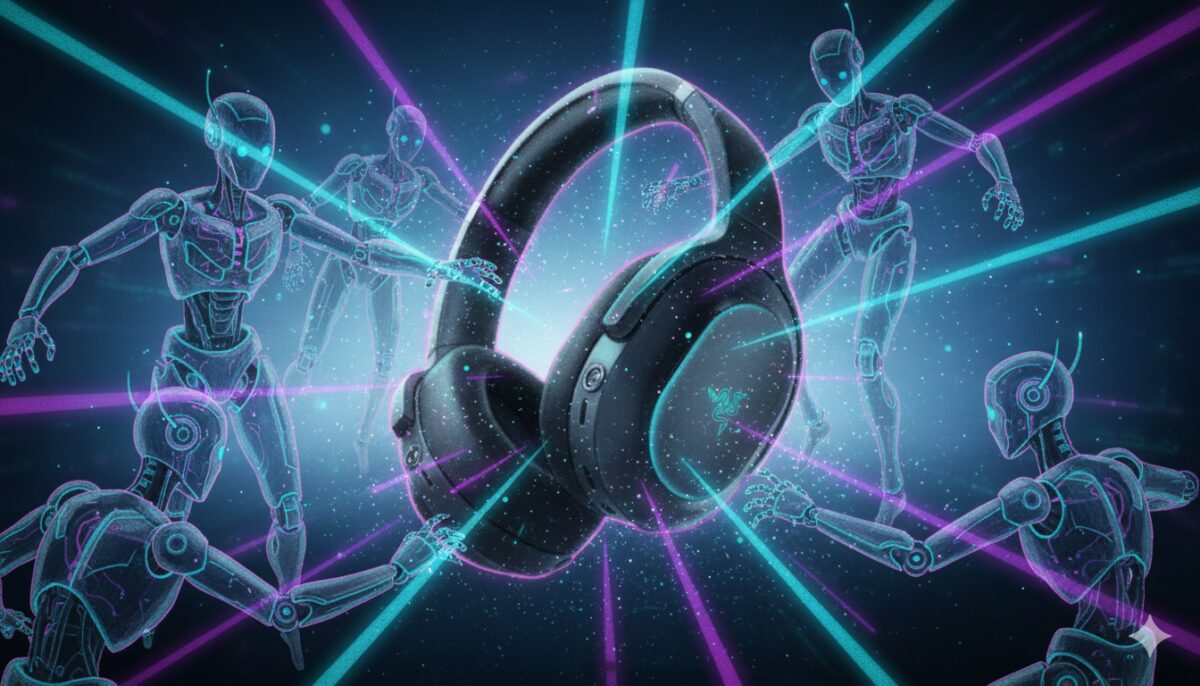
Razer has never been content with incremental innovation. With Project Motoko, the brand pushes boldly into speculative territory, presenting a gaming headset that feels less like an accessory and more like a sentient companion. This concept device offers a tantalizing preview of how artificial intelligence could redefine immersion, comfort, and interaction in gaming audio. It is futuristic, experimental, and unapologetically ambitious.
Table of Contents
ToggleWhat Is Project Motoko? Understanding Razer’s Vision for AI-Driven Headsets
Project Motoko is a concept headset designed to showcase how AI can actively enhance the gaming experience. Rather than delivering static sound output, the headset adapts, reacts, and evolves in real time. It blends machine learning, environmental sensors, and motorized components to create an audio device that responds to both the game and the player wearing it.
Why Razer Is Betting Big on Artificial Intelligence in Gaming Hardware
Artificial intelligence represents the next competitive frontier in gaming hardware. Razer sees AI not as a novelty, but as a functional layer that can optimize performance, reduce friction, and deepen immersion. By embedding intelligence directly into peripherals, Razer aims to make hardware more intuitive, personalized, and responsive than ever before.
First Look at the Design: A Headset That Feels Straight Out of Sci-Fi
Visually, Project Motoko is arresting. Angular contours, exposed mechanical elements, and subtle illumination give it a cybernetic aesthetic. This is not a headset designed to disappear into the background. It announces itself. The design language communicates motion, adaptability, and intent, reinforcing the idea that this is a living system rather than a passive device.
Adaptive Architecture: How the Headset Physically Responds to the User
One of Motoko’s most striking features is its adaptive physical structure. Motorized earcups and headband elements adjust themselves to the wearer’s head shape and movement. This dynamic fit aims to enhance comfort while maintaining optimal acoustic sealing, even during extended gaming sessions or intense physical motion.
AI-Powered Noise Management Explained in Simple Terms
Noise management in Project Motoko goes far beyond standard active noise cancellation. The AI continuously evaluates ambient sound levels and frequencies, deciding what should be muted, softened, or allowed through. The result is a listening experience that feels curated rather than constrained.
Dynamic Noise Cancellation That Adjusts to Your Environment in Real Time
Instead of locking users into a single noise profile, Motoko adapts as conditions change. A quiet room, a noisy gaming event, or a shared living space all trigger different responses. The headset modulates cancellation strength seamlessly, ensuring situational awareness when needed and total immersion when desired.
Intelligent Sound Profiling for Different Game Genres
Not all games sound alike, and Motoko treats them accordingly. The AI can recognize genre-specific audio patterns, emphasizing positional cues in shooters, atmospheric depth in RPGs, or rhythmic clarity in rhythm games. Audio output becomes context-aware, enhancing both performance and enjoyment.
Built-In AI That Learns Your Gaming Habits Over Time
Over extended use, Project Motoko begins to learn player preferences. Volume tendencies, preferred equalization curves, and communication habits are gradually incorporated into its behavior. This adaptive intelligence transforms the headset into a personalized audio ecosystem.
Automatic Audio Tuning Based on Gameplay Intensity
When gameplay escalates, so does the headset’s response. Motoko can dynamically adjust bass response, clarity, and spatial emphasis during high-stakes moments. Calm exploration and frenetic combat are treated differently, ensuring audio output always matches the emotional tempo of the game.
Voice Isolation and Crystal-Clear Communication for Competitive Play
Competitive gaming demands precise communication. Project Motoko employs advanced voice isolation algorithms to separate speech from background noise. Teammates hear only what matters. No keyboard clatter. No ambient distractions. Just clean, articulate voice transmission.
Real-Time Translation Possibilities for Global Multiplayer Gaming
One of the more speculative yet fascinating features is real-time translation. In theory, Motoko could translate spoken communication between players in different languages, reducing barriers in global multiplayer environments. It hints at a future where collaboration transcends linguistic boundaries.
Emotion and Stress Detection: The Headset That Reads the Room
Through biometric and acoustic analysis, Project Motoko explores the idea of detecting emotional states such as stress or excitement. This data could influence audio output, suggest breaks, or adapt feedback intensity. It is a provocative blend of wellness awareness and gaming performance.
Haptic Feedback and Sensory Immersion Beyond Traditional Audio
Audio is only part of the experience. Motoko incorporates haptic feedback elements that synchronize with in-game events. Explosions, impacts, and environmental effects can be felt as well as heard, creating a multisensory layer that amplifies immersion.
Modular and Motorized Components: What Makes Project Motoko “Alive”
The headset’s modularity allows for physical movement and potential customization. Motorized components adjust in response to data, giving the impression of a device that is constantly calibrating itself. This kinetic behavior reinforces the concept of a headset that is actively engaged with its user.
Hands-Free Controls and Gesture-Based Interactions
Traditional buttons and dials are supplemented with gesture recognition. Simple head movements or hand gestures could control volume, switch profiles, or answer calls. This reduces interruptions and keeps the player focused on the experience.
Integration With Razer Synapse and the Wider Razer Ecosystem
Project Motoko is designed to integrate seamlessly with Razer Synapse, enabling centralized control and data synchronization across devices. This ecosystem approach allows AI-driven insights to be shared between peripherals, creating a cohesive and intelligent setup.
Potential Use Cases Beyond Gaming: Streaming, Work, and Virtual Worlds
While gaming is the primary focus, Motoko’s capabilities extend into streaming, remote work, and virtual environments. Adaptive noise control, voice clarity, and immersive feedback make it equally compelling for content creation and digital collaboration.
How Project Motoko Could Change Esports and Competitive Gaming
In esports, marginal gains matter. A headset that optimizes audio cues, reduces fatigue, and enhances communication could offer a tangible competitive advantage. Project Motoko hints at a future where AI-enhanced peripherals become standard equipment at the highest levels of play.
Early Reactions From Tech Enthusiasts and the Gaming Community
Initial reactions have ranged from awe to skepticism. Many admire the ambition and creativity, while others question practicality and accessibility. Regardless, Project Motoko has succeeded in sparking conversation and redefining expectations.
Concept vs. Reality: Is Project Motoko a Prototype or a Future Product?
Razer positions Project Motoko as a concept rather than a confirmed product. It serves as a testbed for ideas, technologies, and design philosophies. Some features may never reach consumers, while others could influence future releases in subtle ways.
Challenges and Limitations of AI-Driven Gaming Headsets
AI-driven hardware introduces complexity. Latency, reliability, and software stability are critical concerns. Ensuring that intelligent features enhance rather than distract remains a significant design challenge.
Battery Life, Comfort, and Practicality Considerations
Motorized components and continuous AI processing demand power. Balancing battery life with performance is essential. Comfort, weight distribution, and heat management also play crucial roles in determining real-world usability.
Privacy Concerns Around AI, Sensors, and User Data
With increased intelligence comes increased data collection. Biometric inputs, voice data, and behavioral patterns raise legitimate privacy questions. Transparent data policies and robust security measures will be essential for user trust.
How Project Motoko Compares to Current High-End Gaming Headsets
Compared to today’s premium headsets, Project Motoko feels like a generational leap. While current models focus on sound quality and comfort, Motoko expands the definition of what a headset can do, introducing adaptability and awareness as core features.
What Project Motoko Signals About the Future of Gaming Hardware
Project Motoko suggests a future where gaming hardware is no longer static. Devices will sense, learn, and respond. Intelligence will be embedded at every level, blurring the line between hardware and software.
Razer’s History of Experimental Projects and Innovation
Razer has a long tradition of showcasing experimental concepts that push boundaries. From modular laptops to AI-driven accessories, these projects serve as innovation laboratories. Motoko fits squarely within this legacy of bold exploration.
The Role of AI in Shaping Next-Generation Player Experiences
AI has the potential to personalize gaming at an unprecedented scale. By adapting to individual players, intelligent hardware can create experiences that feel uniquely tailored, enhancing engagement and emotional connection.
Final Thoughts on Project Motoko’s Impact on the Gaming Industry
Project Motoko may never reach store shelves in its current form, but its influence is undeniable. It challenges assumptions, ignites imagination, and sets a new benchmark for what gaming peripherals could become. In doing so, it reinforces the idea that the future of gaming audio is not just heard, but felt, understood, and alive.