
LEGO Smart Brick
The LEGO Smart Brick represents a compelling fusion of play and computation. It transforms familiar plastic components into responsive, programmable systems capable of sensing, deciding, and acting. More than a toy, it functions as a compact control hub that introduces logic, automation, and creativity in a tangible, approachable form.
What the LEGO Smart Brick Is and Why It Matters
At its core, the LEGO Smart Brick is an intelligent controller designed to power interactive LEGO builds. It interprets code, processes sensor data, and directs motors with remarkable precision. Its importance lies in accessibility. Complex concepts such as algorithms, feedback loops, and robotics become graspable through hands-on experimentation, making abstract ideas concrete and engaging.
The Evolution of LEGO Smart Technology
LEGO’s journey into smart technology reflects a steady shift from static construction toward dynamic, responsive systems. Each iteration has added layers of intelligence while preserving the simplicity that defines the brand.
From Classic Bricks to Intelligent Systems
Traditional LEGO bricks emphasized structure and imagination. The introduction of electronics changed the paradigm. Motors added motion. Sensors introduced awareness. Smart Bricks unified these elements, enabling creations that react to their environment rather than merely existing within it.
A Brief History of LEGO Mindstorms and Smart Control
LEGO Mindstorms marked a pivotal milestone. Originally developed in collaboration with MIT, it brought programmable robotics into homes and classrooms. Over time, Mindstorms evolved with more powerful processors, refined sensors, and modern programming languages, laying the foundation for today’s Smart Brick ecosystem.
Understanding the Core Components of a LEGO Smart Brick
 Photo by LEGO/ Free to use under license.
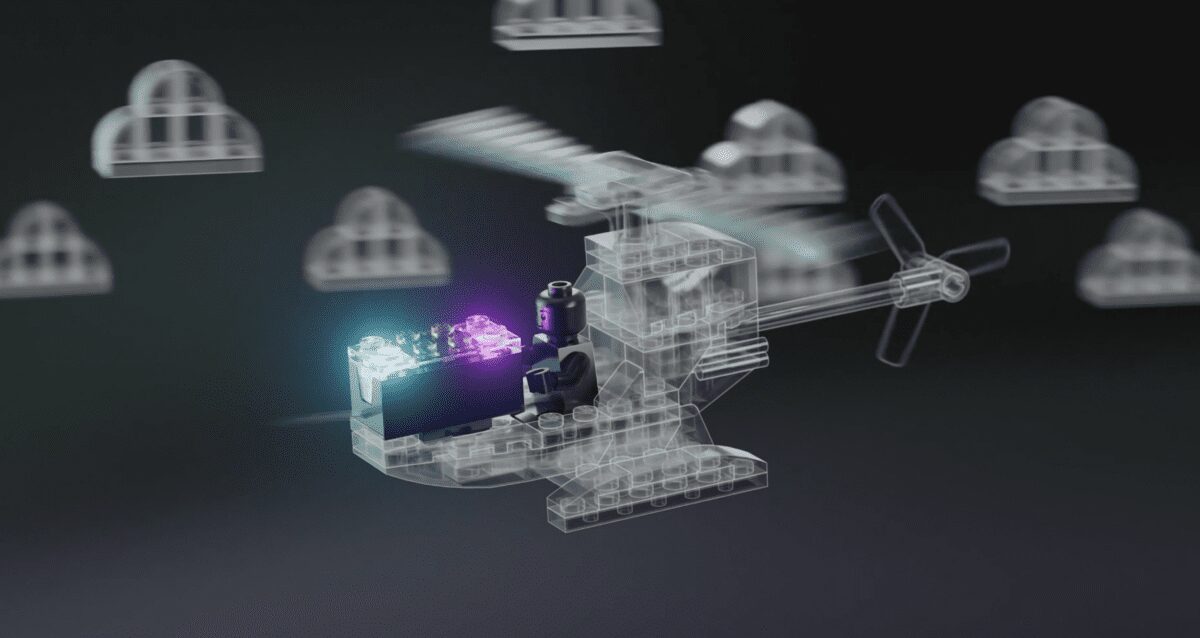 Photo by LEGO/ Free to use under license.
Every Smart Brick is an intricate assemblage of hardware elements working in concert. Each component plays a critical role in transforming code into behavior.
The Central Processing Unit Explained
The CPU acts as the cerebral cortex of the Smart Brick. It executes instructions, manages data flow, and coordinates inputs and outputs. Though compact, it is optimized for real-time decision-making, ensuring immediate responses to sensor changes and user commands.
Built-In Sensors and Their Capabilities
Many Smart Bricks integrate onboard sensors such as accelerometers or gyroscopes. These components detect orientation, motion, and tilt, allowing builds to balance, navigate, or react to physical interaction without external hardware.
Ports, Connectivity, and Expansion Options
Multiple input and output ports allow external sensors and motors to be connected seamlessly. These expansion points are standardized, encouraging modularity and experimentation while maintaining reliable electrical communication.
How the LEGO Smart Brick Works
The functionality of a Smart Brick hinges on a continuous cycle of observation and action, governed by programmed logic.
Powering Logic Through Code
Code provides the instructions that define behavior. Whether written in visual blocks or text-based languages, it establishes conditions, loops, and responses that guide the Smart Brick’s decisions.
Input, Processing, and Output in Simple Terms
Sensors gather information. The processor evaluates that information against programmed rules. Motors, lights, or sounds then respond accordingly. This elegant loop mirrors fundamental computing principles found in far more complex systems.
Types of LEGO Smart Bricks Available
LEGO offers several Smart Brick variants, each tailored to different audiences and applications.
LEGO Mindstorms Intelligent Brick
Designed for advanced users, the Mindstorms brick offers robust processing power and extensive customization. It supports sophisticated robotics projects and advanced programming concepts.
LEGO Powered Up Hubs
Powered Up hubs emphasize simplicity and wireless control. They are ideal for interactive models, vehicles, and beginner-friendly automation projects.
SPIKE Prime and Educational Smart Bricks
SPIKE Prime targets educational environments. Its design balances power and ease of use, aligning with curricula focused on STEM learning and collaborative problem-solving.
Programming the LEGO Smart Brick
Programming defines how intelligence manifests. LEGO’s software options cater to a wide spectrum of skill levels.
Visual Block Coding for Beginners
Block-based coding uses drag-and-drop elements to represent commands. This visual approach reduces cognitive load and allows beginners to focus on logic rather than syntax.
Text-Based Coding with Python
For advanced users, Python unlocks deeper control and expressive power. It introduces real-world programming practices while maintaining compatibility with LEGO hardware.
Choosing the Right Programming Environment
The ideal environment depends on experience, project complexity, and learning goals. Visual tools excel for rapid prototyping, while text-based coding supports scalability and precision.
Sensors That Bring LEGO Creations to Life
Sensors transform static models into perceptive machines capable of interacting with their surroundings.
Motion and Gyro Sensors
These sensors detect acceleration and rotation, enabling balance control, navigation, and gesture-based interaction.
Color and Light Detection
Color sensors distinguish hues and measure light intensity, making line-following robots and responsive displays possible.
Touch, Distance, and Force Sensors
Touch sensors detect physical contact. Distance sensors measure proximity. Force sensors quantify pressure. Together, they enable nuanced interaction and environmental awareness.
Motors and Movement Control
Movement gives LEGO creations purpose and presence. Smart Bricks provide granular control over motor behavior.
Precision Motor Control Explained
Motors can be programmed for speed, rotation angle, and torque. This precision supports complex maneuvers and synchronized actions.
Synchronizing Multiple Motors
Coordinated motor control allows vehicles to steer accurately and robotic arms to move fluidly, mimicking real-world mechanical systems.
Wireless Connectivity and Smart Integration
Modern Smart Bricks embrace wireless communication for flexibility and convenience.
Bluetooth Communication Basics
Bluetooth enables cable-free connections between the Smart Brick and external devices, facilitating real-time control and monitoring.
Connecting to Mobile Devices and Computers
Smartphones, tablets, and computers serve as programming interfaces and remote controllers, expanding interaction possibilities.
Educational Benefits of the LEGO Smart Brick
The Smart Brick is a pedagogical tool disguised as play. Its educational impact is profound.
Teaching STEM Through Hands-On Learning
Concepts in science, technology, engineering, and mathematics become experiential. Learners see immediate outcomes from their decisions.
Encouraging Problem Solving and Logical Thinking
Debugging code and refining builds cultivate resilience, analytical reasoning, and iterative thinking.
Supporting Classroom and Homeschool Use
Structured lessons and open-ended projects alike benefit from the adaptability of Smart Bricks across learning environments.
LEGO Smart Brick for Robotics Projects
Robotics remains one of the most popular applications for Smart Bricks.
Building Autonomous Robots
Through sensors and conditional logic, robots can navigate independently, responding intelligently to obstacles and changes.
Line-Following and Obstacle Avoidance Projects
These classic challenges teach feedback control, sensor integration, and algorithm optimization in an engaging format.
Creative Applications Beyond Robotics
The Smart Brick transcends traditional robotics, inspiring unconventional uses.
Smart LEGO Vehicles
Cars, trains, and drones gain responsiveness, reacting to speed, terrain, or user input.
Interactive Games and Models
Games become participatory experiences with lights, sounds, and motion responding dynamically.
Art, Music, and Experimental Builds
Artists and musicians use Smart Bricks to create kinetic sculptures and generative sound installations, blending engineering with expression.
LEGO Smart Brick in Competitive Robotics
Competition drives innovation and mastery.
LEGO League and Robotics Challenges
Events such as FIRST LEGO League challenge teams to solve real-world problems through robotics and collaboration.
Preparing Competitive Builds with Smart Bricks
Success demands strategic design, efficient coding, and rigorous testing under constraints.
Power Management and Battery Considerations
Reliable power ensures consistent performance.
Rechargeable vs Disposable Power Options
Rechargeable batteries offer sustainability and cost efficiency, while disposable options provide convenience in certain contexts.
Maximizing Runtime and Performance
Optimized code, efficient motor usage, and thoughtful sensor polling extend battery life and reliability.
Troubleshooting Common LEGO Smart Brick Issues
Photo by LEGO/ Free to use under license.
 Photo by LEGO/ Free to use under license.
Challenges are inevitable, yet instructive.
Connectivity Problems and Fixes
Wireless interference or outdated firmware often causes connection issues, typically resolved through updates or resets.
Sensor Calibration Challenges
Calibration ensures accuracy. Periodic adjustment maintains reliable readings.
Software and Firmware Updates
Regular updates introduce enhancements, bug fixes, and improved compatibility.
Best Practices for Building with Smart Bricks
Thoughtful design enhances both aesthetics and functionality.
Designing Efficient and Stable Builds
Balanced structures reduce mechanical strain and improve sensor accuracy.
Managing Cables and Ports Cleanly
Organized wiring minimizes interference and simplifies troubleshooting.
LEGO Smart Brick Accessories and Add-Ons
Accessories expand creative potential.
Compatible Sensors and Motors
Official components ensure seamless integration and reliability.
Third-Party Extensions and Enhancements
External add-ons introduce novel capabilities, from advanced sensors to custom peripherals.
Comparing LEGO Smart Bricks to Other Robotics Controllers
Context clarifies value.
LEGO vs Arduino and Microcontrollers
LEGO emphasizes accessibility and modularity, while microcontrollers offer lower-level control and customization.
Strengths and Limitations of the LEGO Ecosystem
Ease of use and educational focus are strengths, while hardware constraints define its boundaries.
Safety and Durability Considerations
Design choices prioritize user well-being.
Child-Friendly Design and Materials
Rounded edges and robust plastics reduce risk during active play.
Long-Term Use and Wear
High-quality materials ensure longevity even under frequent assembly and disassembly.
Getting Started with a LEGO Smart Brick
Beginning is straightforward and inviting.
What Comes in the Box
Kits typically include the Smart Brick, sensors, motors, and building elements tailored to the system.
First-Time Setup and Configuration
Initial setup involves charging, connecting software, and running simple test programs.
Learning Resources and Community Support
A global ecosystem supports continuous learning.
Official LEGO Tutorials and Apps
Structured guides and interactive lessons ease progression from novice to expert.
Online Communities and Project Libraries
Shared projects and forums foster collaboration and inspiration.
Advanced Projects and Future Possibilities
As skills grow, so do ambitions.
AI and Machine Learning Concepts
Advanced projects introduce pattern recognition, adaptive behavior, and data-driven decision-making.
Smart Cities and Complex Automation Models
Scaled builds simulate traffic systems, energy management, and automated infrastructure.
The Future of LEGO Smart Brick Technology
Innovation continues at a rapid pace.
Trends in Educational Robotics
Greater integration of AI, connectivity, and interdisciplinary learning defines the future landscape.
What to Expect from LEGO Innovation
More powerful hardware, refined software, and expanded ecosystems are poised to redefine creative learning.
Final Thoughts on the LEGO Smart Brick Experience
The LEGO Smart Brick embodies a harmonious blend of playfulness and sophistication. It empowers learners and creators to explore technology through imagination, experimentation, and discovery, leaving a lasting impression that extends far beyond the bricks themselves.