When the Office Turns Into a Drama Arena
An office should be simple. Show up, work, go home.
But reality is often more complicated.
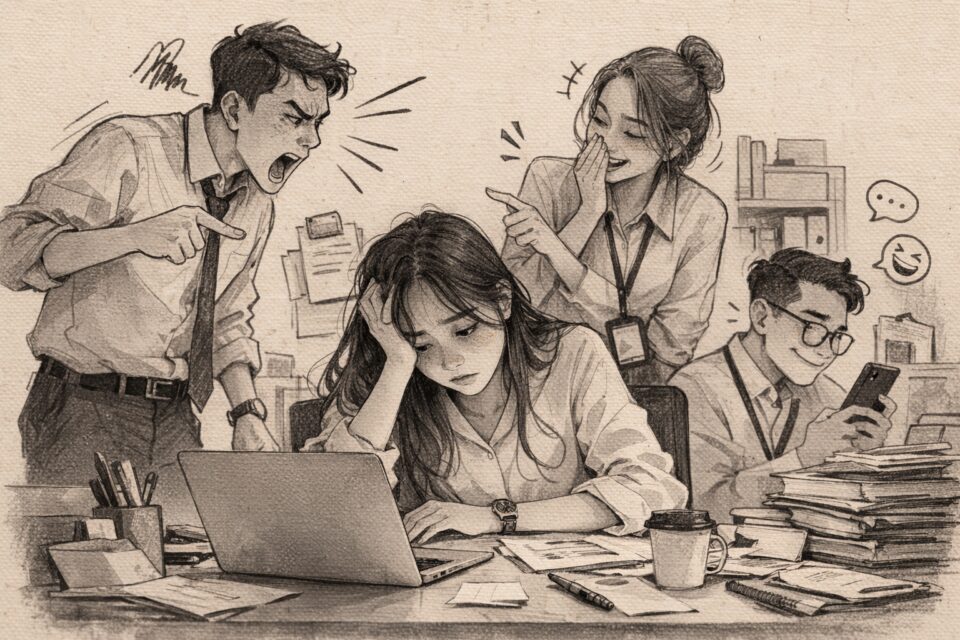
Some offices feel like places of productivity. Others feel more like a stage for an ongoing drama. The dialogue isn’t written in official scripts, but in subtle sarcasm, endless complaints, and gossip that travels faster than monthly reports.
Ironically, many people aren’t actually exhausted by their jobs.
They’re exhausted by the people.
The Company Pays the Salary, But Coworkers Drain the Energy
Technically, the company pays the salary.
Emotionally, coworkers often drain the energy.
Eventually, the workday begins to feel like an advanced exercise in patience.
The Toxic Coworker Phenomenon Is More Common Than We Think
Toxic coworkers are not rare.
>Almost every office has at least one.
Sometimes a single person is enough to make the entire atmosphere feel heavy. Not because they constantly shout or create dramatic conflicts. More often, it’s subtle.
Small comments.
Soft sarcasm.
Light gossip.
Little by little, the workplace atmosphere shifts.
Why Almost Every Office Has One of These “Specimens”
An office is essentially a miniature society.
Inside it are all kinds of personalities.
Some thrive through collaboration. Others through healthy competition.
But some thrive through social drama.
For this type of person, small conflicts are fuel.
Early Signs You’re Dealing With a Toxic Coworker
Toxic people rarely reveal themselves immediately.
They usually appear gradually.
It often begins with casual conversation.
“Hey, do you actually know what A is really like?”
It sounds harmless.
>But over time the conversation changes. Sharper. More personal.
And suddenly your work mood starts to erode.
The Professional Complainer: Distributor of Negative Energy
Some people have a natural talent for complaining.
The weather is wrong. The system is broken. Coworkers are incompetent. The boss is unfair. The world is against them.
In their narrative, there is only one person truly suffering in the office: themselves.
And the complaints appear every day with remarkable consistency.
The Office Gossip King
If an office has an informal information network, the gossip king is the central distributor.
Small news becomes a big story.
Rumors become alternative facts.
Information Spreads Faster Than HR Emails
There is always someone who knows everything.
Who got promoted.
>Who fought with whom.
>Who got scolded by the boss.
The real question isn’t how they know.
The real question is: why are they so eager to spread it?
The Subtle Underminer
This type is more slippery. Not aggressive.
They rarely attack directly.
Instead, they use a more elegant method: poisonous compliments.
“Your presentation was good… for someone like you.”
Technically it’s praise.
But there’s a small needle hidden inside.
And you feel it.
The Credit Thief: Professional Idea Stealer
In team projects, ideas usually emerge from collective discussion.
But some people have very selective memory.
When presentation time arrives, the narrative changes.
“I thought this strategy would work…”
Even though half the room knows the idea came from group brainstorming.
This isn’t forgetfulness.
It’s strategy.
The Office Drama Queen
Every office has small problems.
A broken printer.
A delayed meeting.
A shifting deadline.
For most people, it’s normal.
For the office drama queen, it’s a national tragedy.
Small issues become long stories retold to everyone in the office—each version slightly more dramatic than the last.
The Friendly-Looking Manipulator
This is the most sophisticated type.
Friendly. Polite. Easy to get along with.
But behind the smile is careful social calculation. They collect information, observe office dynamics, then construct narratives that serve their interests.
The results often aren’t visible immediately.
But suddenly someone’s reputation changes—and no one knows why.
Why Toxic People Often Last Longer in Offices
This is a classic question.
The answer often involves office politics.
Some people are excellent at reading situations. They know when to criticize and when to be extremely agreeable to the boss.
In many workplaces, that skill can sometimes outperform pure hard work.
The Impact on Productivity
Work environments strongly influence performance.
Healthy environments help people focus.
Toxic environments make people cautious.
Energy is spent on nonproductive things: avoiding certain coworkers, choosing words carefully, protecting personal reputation.
The work may be the same.
But it feels twice as heavy.
The Psychological Effects People Often Ignore
Many assume work stress comes only from deadlines.
In reality, it often comes from exhausting social interactions.
Daily comments.
Constant sarcasm.
Endless drama.
These small things accumulate.
And slowly drain mental energy.
When Toxicity Becomes Contagious
Toxic behavior rarely stops with one person.
Complaints spread.
Cynicism grows.
Gossip multiplies.
Gradually, the office atmosphere changes.
It stops being a place of collaboration and becomes a place of quiet suspicion.
The Common Mistake When Dealing With Toxic People
Many people try the same strategy: pleasing everyone.
The intention is good.
But it rarely works.
Toxic individuals often see it as more space to continue their behavior.
Without clear boundaries, the drama simply repeats.
Surviving Without Becoming Toxic
The most effective strategy is often the simplest.
Stay professional.
Stay neutral.
Sometimes the best response is the art of nodding without truly engaging. Listening without spreading. Responding without adding fuel to the drama.
Not every conversation needs to be won.
Some simply need to be ignored.
Limiting Interaction Elegantly
There’s no need for dramatic confrontation.
Focus on work.
Interact when necessary.
Calm social boundaries are often far more effective than open conflict.
Building a Healthy Circle of Coworkers
Fortunately, not everyone in the office is toxic.
There are always a few people who are professional, rational, and pleasant to work with.
This small circle matters.
They become a stabilizing force in an otherwise exhausting environment.
Protecting Your Mental Health
One important thing to remember: the office is not your entire life.
Work matters.
But mental health matters more.
Maintaining emotional distance from office drama is often the simplest form of self-protection.
Self-Reflection
There’s one uncomfortable possibility.
What if we have also been part of the problem?
Maybe we complained too much.
Maybe we spread a story once or twice.
This realization isn’t pleasant.
But it’s useful.
The Biggest Challenge Is Often Not the Work
Work itself is not always difficult.
What makes it exhausting is often the human dynamics around it.
But with clear boundaries, thoughtful communication, and a bit of humor, it’s possible to survive the workplace without getting pulled into the drama.
Because in the end, the biggest challenge in many workplaces isn’t the job.
It’s the people. 😅