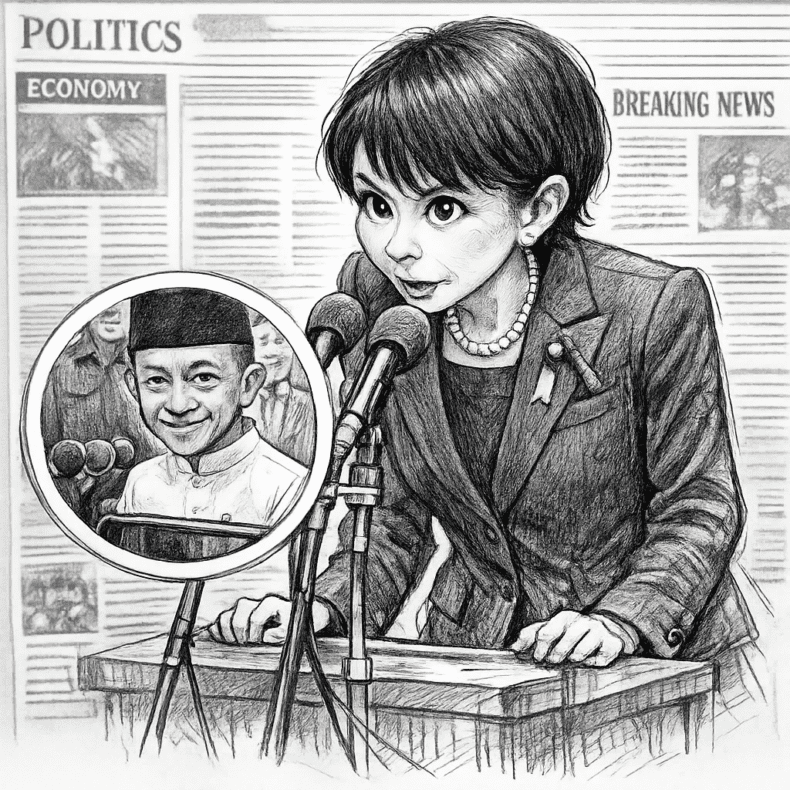
When 254 Days Feels Insufficient and 20 Days Feels Just Fine
Two numbers. 254 and 20. One triggers raised eyebrows in government offices. The other still allows for a calm afternoon coffee.
Japan holds oil reserves equivalent to roughly 254 days. Indonesia? Around 20 days. Ironically, the country with the thicker cushion appears far more uneasy.
This is not merely arithmetic. It is a question of risk mentality.
Oil: An Ordinary Commodity with Extraordinary Consequences
Oil is not just fuel. It is the backbone of mobility, industry, logistics, and even political stability. Without it, trucks stop moving, prices climb, and governments rush into emergency press briefings.
In the digital age, electricity may be king. But without stable fossil energy supply, that kingdom collapses rather quickly.
Japan: Trauma Transformed into System
As a member of the International Energy Agency, Japan is required to maintain at least 90 days of net import reserves. Yet it goes far beyond that threshold.
Why? Because the 1973 oil crisis left a deep institutional scar. For Japan, dependence without a buffer equals vulnerability. The response was strategic petroleum reserves, massive storage infrastructure, and a culture of disciplined energy efficiency.
They do not wait for storms. They build shelters before clouds gather.
Indonesia: Resource-Rich, Reserve-Poor
Indonesia often brands itself as resource-rich. True—for coal and nickel. But oil tells a different story. Production declines, consumption rises, imports expand.
With reserves covering roughly 20 days, breathing space is narrow. A month-long import disruption would immediately strain the system. Unfortunately, such warnings are often treated as background noise rather than urgent alarms.
Infrastructure and Mindset
Japan invests in large-scale storage facilities and layered reserve systems. Indonesia continues to struggle with limited refinery capacity and storage constraints.
Here, Pertamina plays a central role. Yet structural burdens cannot be solved by a single entity. They require political will, long-term investment, and consistent policy direction.
The issue is not purely technical. It is philosophical: do we truly feel exposed?
Geopolitics Never Rests
A disruption in the Strait of Hormuz alone can jolt global prices. Countries with thick reserves gain time to negotiate. Those with thin reserves gain urgency—and sometimes panic.
Oil prices surge, subsidies swell, fiscal pressure intensifies. The domino effect is real.
254 vs 20: A Question of Attitude Toward Risk
Japan may appear overly cautious. Indonesia may appear overly relaxed. Yet in a volatile world, calibrated anxiety is often more rational than optimism without insulation.
Two hundred fifty-four days symbolize systemic vigilance. Twenty days symbolize a high tolerance for risk.
The question is simple: if a crisis arrives tomorrow, which side would you rather stand on?