The Sudden Comeback of a Digital Time Capsule
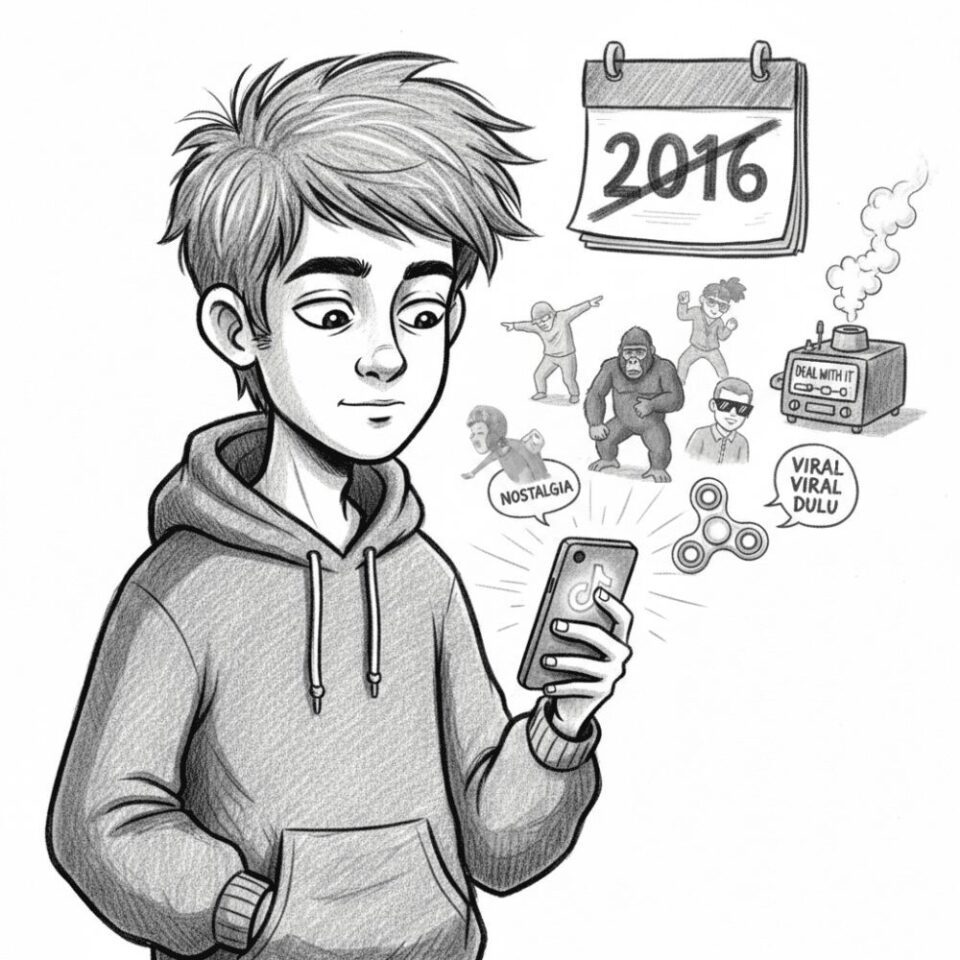
Scroll long enough on TikTok and a strange sensation emerges. Videos feel oddly familiar. Punchlines land with a déjà vu thud. It is as if the internet cracked open a long-sealed archive and began scattering its contents across the For You page. Content once buried in Vine compilations, early YouTube edits, and forgotten meme folders is suddenly alive again, reframed for a new audience yet unmistakably rooted in 2016.
When Vine Energy Meets TikTok Algorithms
TikTok did not invent short-form chaos. Vine perfected it. Six-second absurdity, sharp edits, and punchy visual gags defined that era. TikTok’s algorithm, ravenous for watch time and repeat views, happens to reward the same kinetic humor. Old Vine-style content slips seamlessly into this system, performing like it never left, only now amplified by a more sophisticated distribution engine.
A Brief Snapshot of the Internet in 2016
The internet of 2016 was smaller, messier, and less self-conscious. Creators posted without an expectation of virality as a career path. Platforms felt like playgrounds, not marketplaces. Content was impulsive, raw, and frequently unpolished. That looseness is precisely what makes it feel refreshing today.
The Cultural Mood of the Mid-2010s
Mid-2010s culture sat at an inflection point. Social media was dominant but not yet exhausting. Algorithms were present but less oppressive. There was a collective sense of novelty, a belief that the internet was still discovering itself. That optimism permeated the content, giving it a buoyancy that resonates in hindsight.
Pre-Pandemic Humor and the Appeal of Simplicity
Before global anxiety recalibrated online expression, humor was lighter, more flippant. Jokes did not need layers of irony or social commentary to justify their existence. A poorly timed scream, an awkward pause, or an intentionally bad edit was enough. In a hyper-aware digital climate, that simplicity feels almost luxurious.
What Defined “Internet Content” in 2016?
Content was not branded as content. It was just something funny someone made. There were fewer trends, fewer templates, and far less optimization. Creativity thrived in constraints, whether it was Vine’s six seconds or early Instagram’s square frame.
Relatable Chaos and Lo-Fi Aesthetics
Blurry footage. Overexposed lighting. Audio peaking into distortion. These were not flaws; they were part of the language. The lo-fi aesthetic conveyed authenticity, a sense that what viewers were seeing had not been sanded down for mass appeal. TikTok’s current embrace of “imperfect” visuals mirrors that ethos.
Early Meme Formats That Refuse to Die
Certain meme structures possess remarkable longevity. Reaction faces, sudden zooms, freeze-frame captions. These formats are endlessly adaptable, capable of absorbing new cultural references without losing their core appeal. TikTok users revive them instinctively, often without knowing their origins.
TikTok’s Algorithmic Appetite for Nostalgia
Nostalgia performs well. It keeps viewers watching longer, sharing more, and commenting with personal anecdotes. TikTok’s algorithm detects these signals with surgical precision. Old content, infused with familiarity, triggers engagement metrics that modern videos often struggle to replicate.
How Engagement Signals Favor Familiar Content
When viewers recognize something, even subconsciously, they linger. They rewatch. They send it to friends. Familiarity breeds comfort, and comfort breeds interaction. The algorithm rewards this loop, pushing nostalgic content further into circulation.
Why Old Clips Feel New to Younger Audiences
For Gen Z, 2016 is not nostalgia. It is archaeology. These clips are artifacts from a recent but distinct digital past, discovered without context and judged purely on entertainment value. Detached from their original moment, they feel fresh, strange, and oddly compelling.
The Power of Discovery Over Original Context
TikTok thrives on decontextualization. A clip no longer needs its backstory to succeed. It simply needs to evoke a reaction. Stripped of timestamps and origin myths, 2016 content becomes modular, ready to be reinterpreted by anyone who stumbles upon it.
Nostalgia Marketing in the Age of Short-Form Video
Brands have noticed the shift. Nostalgia, once deployed cautiously, is now a strategic asset. Short-form video allows marketers to reference the past without committing to it fully, creating emotional resonance in seconds rather than campaigns.
Why Brands Are Quietly Watching This Trend
There is risk in chasing nostalgia too aggressively. Audiences are adept at detecting inauthenticity. Brands that succeed tend to observe first, learning how organic creators revive old content before attempting their own throwback narratives.
The Role of Audio in Reviving Old Visuals
Sound is memory’s fastest shortcut. A familiar audio clip can transport viewers instantly, even if the visuals are new. TikTok’s audio-first discovery model gives forgotten sounds a second life, often independent of their original videos.
Sounds That Trigger Collective Memory
A distorted laugh. A dramatic sting. A badly autotuned lyric. These sounds act as mnemonic devices, unlocking shared experiences across timelines. Once reintroduced, they spread rapidly, carried by emotional recognition rather than novelty alone.
Reusing 2016 Audio Clips for Modern Punchlines
Creators pair old audio with contemporary visuals, creating a temporal collision. The humor emerges from contrast, not replication. The past becomes a tool, not a destination.
Irony, Absurdism, and the Post-Ironic Internet
Internet humor has completed several evolutionary loops. What was once sincere became ironic, then absurd, then post-ironic. 2016 content sits at a crossroads of these modes, allowing it to function on multiple comedic frequencies simultaneously.
Why 2016 Humor Hits Differently Today
Removed from its original earnestness, 2016 humor gains new layers. What once felt spontaneous now feels intentionally unpolished. Viewers project meaning onto simplicity, finding relief in jokes that do not demand interpretation.
The Rise of “So Bad It’s Good” Content
Bad timing. Awkward delivery. Questionable editing choices. These elements are no longer liabilities. They are signals of authenticity. TikTok audiences increasingly reward content that resists refinement, echoing the spirit of mid-2010s internet culture.
Creators as Digital Archivists
Many creators act as informal historians, resurfacing clips, sounds, and formats with curatorial instinct. They do not merely repost. They contextualize through juxtaposition, framing the past as material for creative dialogue.
How TikTok Users Recontextualize Old Media
Captions, stitches, and edits transform original meaning. A clip once intended as slapstick becomes commentary. A forgotten meme becomes satire. Recontextualization is the engine that keeps old content relevant.
Remixes, Duets, and the Art of Reinvention
TikTok’s native tools encourage participation over preservation. Old content is not frozen. It is invited into conversation, reshaped by each interaction until it barely resembles its source.
Generational Cross-Pollination on TikTok
TikTok collapses generational boundaries. Content circulates without regard for age, era, or intended audience. This frictionless exchange accelerates cultural recycling.
Gen Z Discovering Millennial Internet Culture
For younger users, millennial-era content offers a glimpse into a less commercialized digital world. It feels experimental, unfiltered, and refreshingly unserious.
Millennials Reclaiming Their Online Past
For millennials, the resurgence is both nostalgic and disorienting. Old jokes resurface divorced from their original communities, now judged by audiences who did not live through their creation.
The Emotional Comfort of Familiar Content
Familiarity soothes. In an era defined by rapid change, recognizable humor offers stability. Even imperfect memories provide refuge.
Escapism Through Internet Nostalgia
Nostalgic content allows viewers to momentarily exit the present. It offers a curated past, free of current anxieties, distilled into seconds of levity.
Why the Past Feels Safer Than the Present
The past is finite. It cannot surprise or disappoint. Revisiting it through content feels controllable, predictable, and emotionally manageable.
Is This a Passing Trend or a Long-Term Shift?
Trends may ebb, but cycles persist. The resurfacing of 2016 content suggests not a fad, but a pattern of digital recycling intensified by algorithmic systems.
Signals That Point to a Cyclical Content Economy
As platforms mature, novelty becomes scarce. Recycling accelerates. Old content gains value not despite its age, but because of it.
What the 2016 Revival Says About Internet Culture Today
The revival reflects an internet searching for authenticity amid optimization. It signals fatigue with hyper-polished personas and algorithm-chasing creativity. In resurrecting 2016, TikTok is not looking backward. It is negotiating what the future of online expression should feel like.