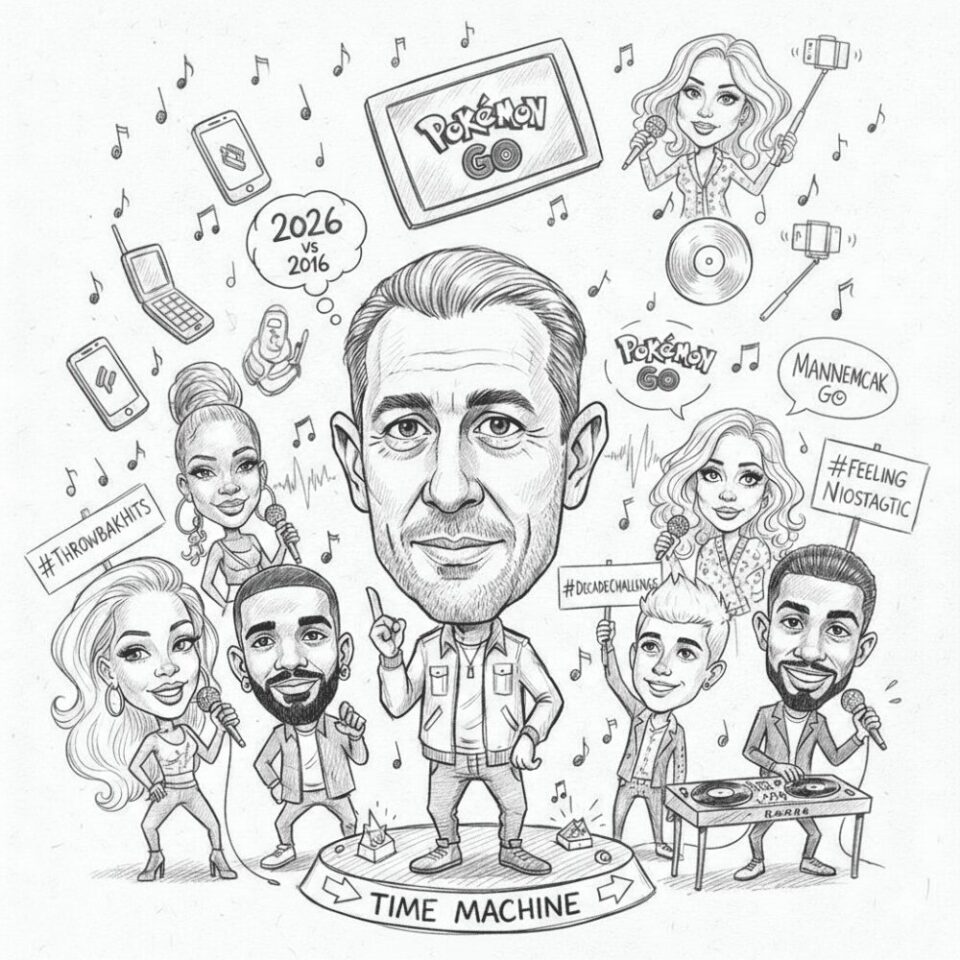
A strange refrain has settled into everyday conversation, online threads, and late-night group chats: this feels like 2016 again. It’s not a throwaway comment. It’s a shared intuition, a low hum of recognition that spans politics, pop culture, and the emotional temperature of public life. While history never truly repeats itself, the sensation of recurrence can be powerful—and revealing.
The Viral Feeling That Sparked a Cultural Déjà Vu
The idea didn’t emerge from think tanks or academic journals. It went viral. Short posts, memes, and offhand remarks snowballed into a widely accepted feeling. One person said it. Then thousands nodded along. The algorithm did the rest. What began as a vague sentiment hardened into a cultural shorthand for confusion, intensity, and unpredictability.
When Nostalgia Becomes a Collective Emotion
Nostalgia is no longer a private indulgence. It has become communal, networked, and performative. In 2026, remembering 2016 isn’t just about longing for the past; it’s about making sense of the present through a familiar emotional framework. Nostalgia, in this context, acts like an interpretive lens—softening sharp edges while amplifying selective memories.
The 2016 Blueprint: Why That Year Still Lingers in Public Memory
For many, 2016 marked a rupture. Political norms bent. Cultural tensions surfaced. The digital world accelerated beyond what anyone expected. It was a year that felt pivotal in real time, not just in retrospect. That sense of historical importance cemented 2016 as a reference point, a blueprint people instinctively return to when current events feel similarly unmoored.
Political Whiplash and the Return of High-Voltage Discourse
The political atmosphere of 2026 feels electrically charged. Rhetoric is sharp. Emotions run hot. Compromise seems scarce. This intensity mirrors the climate of a decade earlier, when politics became omnipresent and deeply personal. Once again, every headline feels consequential, and every debate feels existential.
Election Cycles, Polarization, and the Sense of History Repeating
Election seasons amplify déjà vu. Familiar fault lines reappear, sometimes with new labels but the same underlying tensions. Polarization has not softened with time; it has calcified. The cyclical nature of campaigns, scandals, and sweeping predictions feeds the perception that society is running in place rather than moving forward.
Protest Culture Then and Now: Familiar Chants, New Hashtags
Public demonstrations still fill streets and screens. The chants echo earlier movements, even as the causes evolve. What has changed is the infrastructure. Hashtags replace handmade signs. Livestreams replace nightly news segments. Yet the emotional core—anger, hope, urgency—feels strikingly familiar.
Pop Culture Echoes: When Old Sounds Feel New Again
Turn on the radio or scroll through trending tracks, and the past resurfaces. Sonic palettes reminiscent of the mid-2010s dominate playlists. Artists sample, interpolate, and reference that era with unapologetic enthusiasm. The result is a cultural feedback loop where familiarity masquerades as novelty.
The Comeback of Mid-2010s Music, Fashion, and Aesthetics
Skinny jeans, oversized hoodies, minimalist sneakers. Visual motifs once declared passé have returned with confidence. Fashion cycles are moving faster, but they’re also looping tighter. What once took decades to reemerge now returns in under ten years, reinforcing the illusion that time itself is folding inward.
Why Streaming Algorithms Keep Reviving the 2010s
Algorithms thrive on predictability. They resurrect what once worked, nudging users toward songs, shows, and styles already proven to engage. This constant resurfacing of mid-2010s content keeps that era culturally alive, not as history but as a living, breathing influence.
Social Media Platforms as Time Machines
Social platforms are archives disguised as feeds. Memories resurface automatically. Old posts reappear without warning. The past is never fully past online. In 2026, this perpetual recall collapses temporal distance, making 2016 feel closer than it objectively is.
From Twitter to X, From Instagram to TikTok: Same Energy, Different Interfaces
Platform names and features change, but behavioral patterns persist. Outrage cycles, viral dogpiling, ironic detachment—they all survived rebranding. The interfaces evolved, yet the emotional cadence of online life remains remarkably consistent.
The Meme Economy and the Recycling of Internet Humor
Memes are cultural fossils and living organisms at once. Formats from 2016 are revived, remixed, and redeployed with self-awareness. The joke often isn’t the content itself, but the fact that everyone recognizes its lineage.
Global Anxiety as a Shared Backdrop
Beyond screens and soundtracks lies a deeper similarity: unease. In 2026, uncertainty permeates daily life. The sources vary, but the mood aligns. It’s a low-grade anxiety that never fully dissipates, shaping how people interpret events both large and small.
Economic Unease, Inflation Fears, and the Mood of Uncertainty
Rising costs, precarious employment, and shifting markets contribute to a sense of instability. These economic undercurrents mirror earlier anxieties, reinforcing the perception that society is stuck in a prolonged holding pattern.
Tech Optimism Meets Tech Fatigue—Again
Once again, technology promises transformation while simultaneously exhausting its users. Innovation dazzles, but skepticism follows close behind. The cycle of hype and disillusionment feels familiar, as if society is replaying an old script with upgraded hardware.
AI, Automation, and the Same Old Questions About the Future
Artificial intelligence dominates headlines much like earlier technological breakthroughs did in 2016. The questions remain eerily consistent: Who benefits? Who loses? What does this mean for work, creativity, and identity? New tools, old anxieties.
Celebrity Culture: Scandals, Comebacks, and Media Frenzies
Fame remains volatile. Scandals erupt. Redemption arcs unfold. Media frenzies consume attention before abruptly moving on. The churn feels relentless, echoing a decade-old rhythm that never quite slowed.
Why Fame Feels Louder and More Chaotic in 2026
The amplification mechanisms are stronger now, but the chaos feels familiar. A single misstep can dominate discourse for days. Celebrity culture operates at a fever pitch, blurring the line between significance and spectacle.
The News Cycle That Never Slows Down
There is no off switch. Breaking news is perpetual, layered, and often overwhelming. The sense of urgency mirrors earlier years when every alert felt like the start of something monumental.
Breaking News Burnout and the 24/7 Information Loop
Constant exposure breeds fatigue. Audiences oscillate between obsession and avoidance, caught in an information loop that mirrors the emotional exhaustion many associate with 2016.
Generational Memory and the Psychology of Comparison
Human perception relies on benchmarks. For many adults today, 2016 represents a formative moment—a time when the world felt like it irrevocably shifted. Comparisons are inevitable, even when imperfect.
Why Millennials and Gen Z Are Driving the 2016 Comparison
These generations came of age during the mid-2010s. Their political awakening, cultural tastes, and digital habits were forged then. When current events trigger similar emotions, the comparison surfaces instinctively.
The Role of Trauma and Turning Points in Time Perception
Psychological research suggests that periods of collective stress distort time perception. Traumatic or transformative moments anchor memory. When present conditions resonate with those anchors, the past feels uncomfortably close.
Is This Really a Repeat—or Just a Rhyme?
History rarely repeats verbatim. It rhymes. Patterns echo without duplicating. Recognizing similarities doesn’t mean ignoring differences—it means understanding how narratives evolve while emotions recur.
What’s Actually Different About 2026 Beneath the Surface
Beneath the familiar surface lies a changed world. Technology is more integrated. Social norms have shifted. Global power structures look different. The resemblance, while compelling, is incomplete.
The Comfort of Familiar Chaos
There is a strange solace in recognition. If this feels like 2016, then perhaps it’s survivable. Familiar chaos can feel less threatening than uncharted territory.
Why People Find Reassurance in Recognizable Patterns
Patterns offer predictability. Even turbulent ones. They provide a sense of orientation when the future feels opaque, anchoring uncertainty to something already endured.
Cultural Cycles and the Myth of Linear Progress
Progress is not a straight line. Culture moves in spirals, revisiting themes and tensions from new angles. The belief in constant forward motion falters when cycles become visible.
What This 2016 Feeling Says About Where Society Is Headed
The comparison reveals more about the present than the past. It suggests a society grappling with unresolved questions, returning to familiar frames in search of clarity.
Looking Forward Without Letting the Past Take Over
Acknowledging echoes doesn’t require living inside them. The challenge lies in learning from previous chapters without becoming trapped by their shadow.
Is the “2016 All Over Again” Narrative Here to Stay?
As long as uncertainty persists and cultural memory remains vivid, the comparison will resurface. Whether it defines the era—or fades as circumstances change—depends on what comes next, and how willing society is to imagine something genuinely new.